
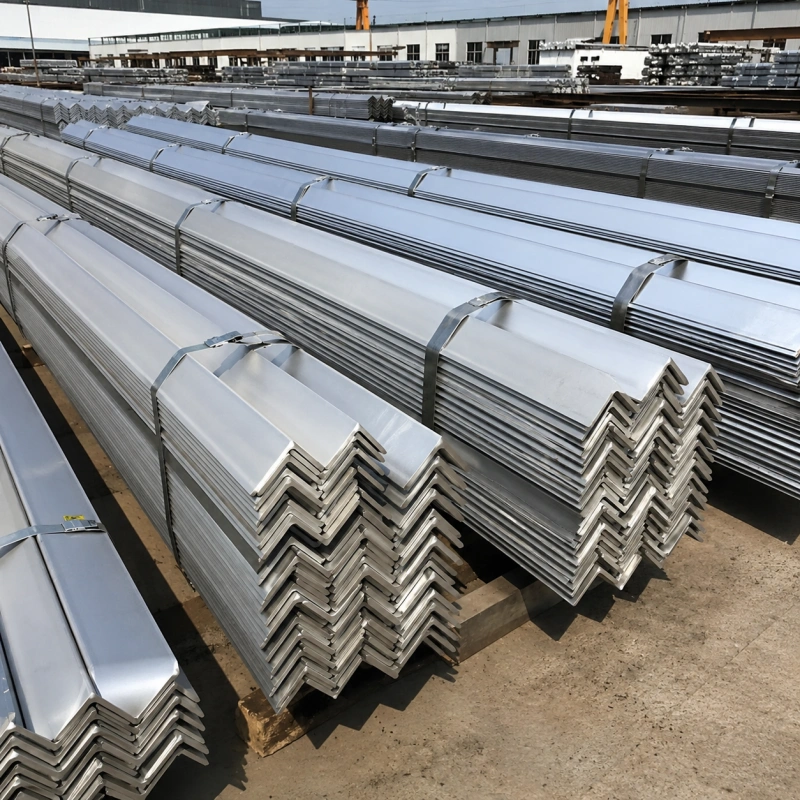
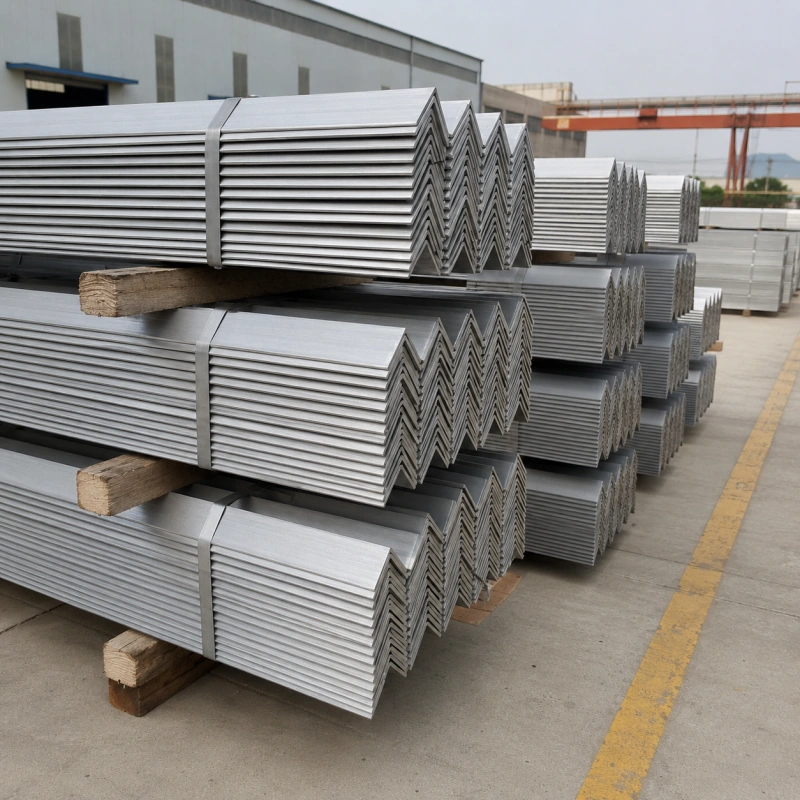
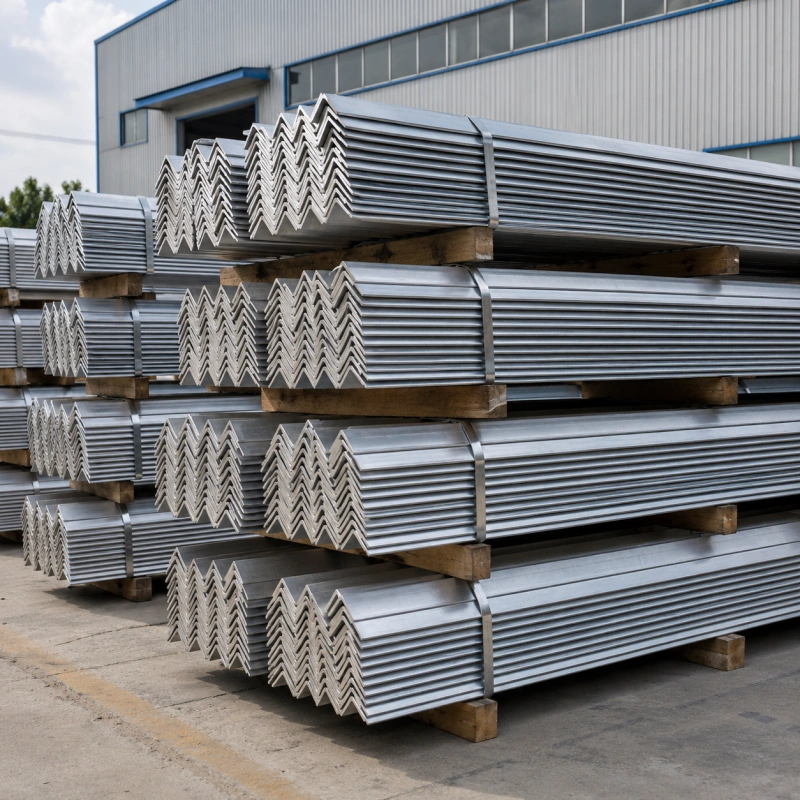
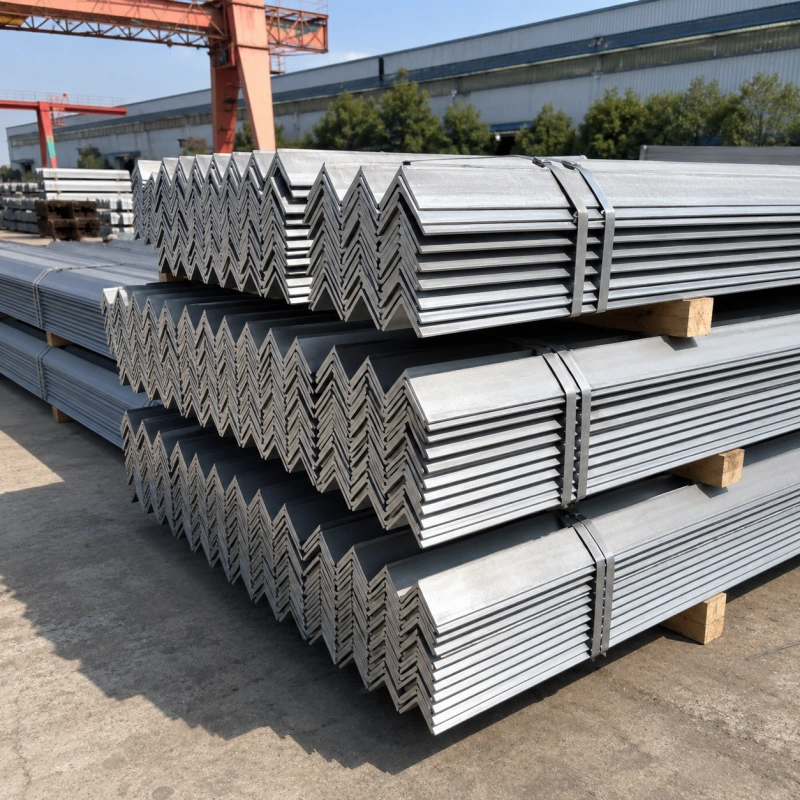
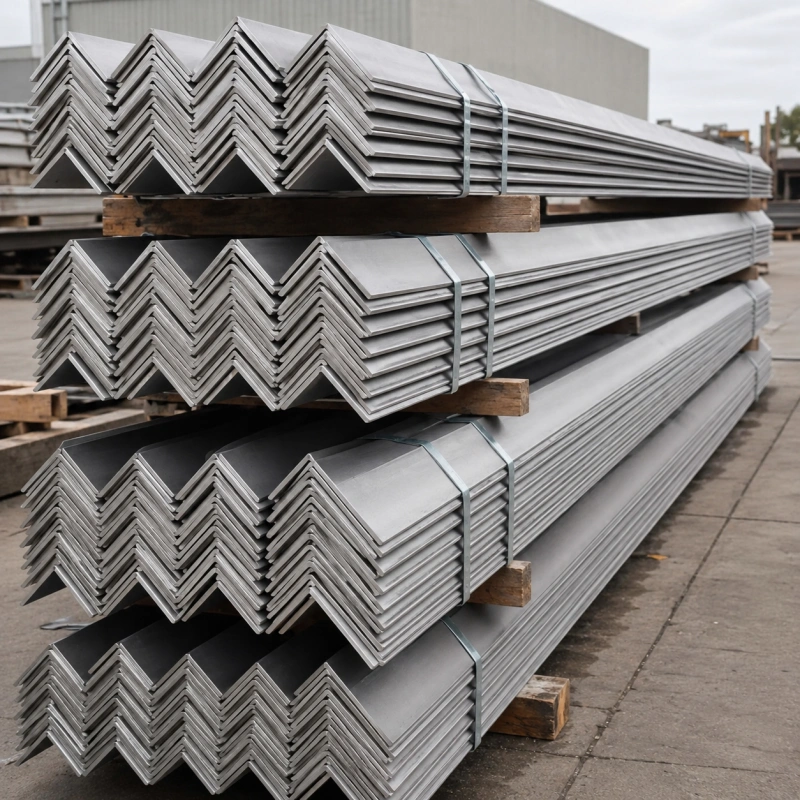
Stainless Steel Angle Bar – Corrosion-resistant L-shaped profile for structural fabrication.
Equal & Unequal Angles – Multiple leg dimensions and thicknesses are available.
304 & 316L Grades – Material options for general, food and corrosive environments.
Custom Processing Service – Cutting, drilling, welding and polishing can be arranged.
Export Ready Supply – MTC, inspection support, bundle packing, FOB, CIF and CFR available.
Stainless steel angle bar is an L-shaped metal profile formed with two perpendicular legs. It is available as an equal angle with two legs of the same width or an unequal angle with different leg dimensions.
The combination of structural rigidity, corrosion resistance and clean appearance makes stainless steel angle suitable for equipment frames, brackets, supports, architectural structures, food-processing machinery, chemical facilities and marine fabrication.
Henan GDD supplies stainless steel angles in multiple grades, dimensions, thicknesses, lengths and surface conditions. Cutting, drilling, welding preparation, polishing and drawing-based processing can be arranged according to project requirements.
| Item | Specification |
|---|---|
| Product Name | Stainless Steel Angle Bar / Stainless Steel L Angle |
| Angle Type | Equal Angle / Unequal Angle |
| Common Grades | 201, 202, 304, 304L, 316, 316L, 321, 310S, 430 or Customized |
| Applicable Standards | ASTM A276, ASTM A484, EN 10088, JIS, GB/T or Customer Specification |
| Equal Angle Size | 20 × 20 mm – 200 × 200 mm or Customized |
| Unequal Angle Size | 25 × 16 mm – 200 × 125 mm or Customized |
| Thickness | 2 mm – 25 mm or Customized |
| Length | 3 m, 4 m, 5.8 m, 6 m or Customized |
| Production Method | Hot Rolled, Cold Drawn, Bent from Plate or Welded and Fabricated |
| Surface Finish | No.1, Pickled, Sandblasted, Brushed, Polished or Customized |
| Edge Condition | Mill Edge, Cut Edge, Deburred Edge or Machined Edge |
| Processing Service | Cutting, Drilling, Punching, Welding, Bending, Grinding, Polishing and Drawing-based Fabrication |
| Inspection | MTC, PMI, Dimension Inspection, Surface Inspection, Mechanical Test and Third-party Inspection |
| Applications | Frames, Supports, Brackets, Food Equipment, Chemical Plants, Marine Structures and Architecture |
| Packing | Steel Strip Bundles, Waterproof Wrapping, Wooden Cases or Customized Export Packing |
| Trade Terms | FOB, CFR, CIF, EXW |
Available dimensions, tolerances and surface finishes may vary according to the selected grade, production method and order quantity. Final specifications should be confirmed through the purchase order, approved drawing and material certificate.
Stainless steel angle bar is a structural profile with an L-shaped cross section. Its two perpendicular legs provide rigidity and make the material convenient for joining frames, reinforcing corners and supporting equipment.
Unlike ordinary carbon steel angle, stainless steel angle contains alloying elements that improve corrosion resistance. The actual performance depends on the selected grade, surface condition, fabrication process and service environment.
Stainless angle can be welded, bolted, drilled or combined with stainless steel plates, pipes, channels and other profiles to manufacture complete structural assemblies.
Equal stainless steel angle has two legs with the same width. It is commonly used for frames, brackets, shelves, supports, corner protection and general structural fabrication.
Unequal stainless steel angle has two legs of different widths. It is suitable for structures requiring an asymmetric profile, additional support on one side or a specific connection geometry.
Hot rolled stainless angle is commonly supplied in medium and large structural sizes. It normally has a No.1 or pickled surface and is suitable for industrial equipment, frames and heavy fabrication.
Cold drawn stainless angle provides tighter dimensional control and a cleaner surface than conventional hot rolled profiles. It is suitable for precision frames, equipment parts and visible applications.
Polished stainless angle has a processed surface for architectural, decorative and hygienic applications. The required grit, brightness and polishing direction should be confirmed before production.
Stainless steel plate can be cut and bent into L-shaped sections when special leg dimensions, thicknesses or short production quantities are required.
Grade 304 provides a practical combination of corrosion resistance, forming performance and weldability. It is widely used for food equipment, architectural structures, indoor and outdoor frames, machinery and general fabrication.
Grade 304L has a lower carbon content than standard 304. It is often selected for welded structures where improved resistance to sensitization after welding is required.
Grade 316 contains molybdenum and generally provides better resistance to chloride-containing and more corrosive environments than grade 304.
Grade 316L combines the corrosion characteristics of the 316 family with a lower carbon content. It is widely considered for chemical equipment, coastal structures, marine components and welded industrial assemblies.
Grade 201 can provide an economical option for indoor structures, furniture, decorative frames and lower-corrosion environments. It should not be treated as a direct replacement for 304 in demanding corrosive applications.
Grade 310S is commonly considered for elevated-temperature equipment and heat-resistant structural components. Final temperature suitability depends on loading, atmosphere and operating conditions.
Grade 430 is a ferritic stainless steel offering moderate corrosion resistance and magnetic properties. It can be used for indoor equipment, decoration and selected fabrication applications.
Stainless steel angle bar is used for machinery frames, equipment bases, mounting brackets, structural supports, shelves, work platforms and protective corners.
Food-processing and beverage equipment manufacturers use stainless angles for machine frames, production tables, conveyor supports, guard structures and hygienic fabrication.
In chemical and industrial facilities, stainless angles are used for pipe supports, equipment frames, access platforms, tank accessories and corrosion-resistant structural components.
Architectural applications include handrail frames, façade supports, decorative trim, door frames, partitions, shop fittings and exposed structural details.
Marine and coastal projects may use suitable stainless steel grades for boat components, dock equipment, equipment supports and structures exposed to humid or chloride-containing environments.
Suitable stainless steel grades provide improved resistance to atmospheric corrosion, moisture and many industrial environments compared with untreated carbon steel.
The L-shaped cross section provides practical stiffness for frames, brackets, supports and reinforced corners.
Pickled, brushed and polished surfaces can provide a clean metallic finish for visible architectural and equipment applications.
Different stainless steel grades can be selected according to corrosion exposure, temperature, welding requirements, strength and budget.
Stainless angles can be cut, drilled, welded, ground and polished into finished frames, brackets and project components.
Stainless steel generally does not require painting or galvanizing, helping simplify maintenance in suitable service environments.
Equal angle has two identical leg widths and is suitable for balanced connections, frames, supports and corner reinforcement.
Unequal angle has one wider leg and one narrower leg. It can provide additional connection area or fit structures where available space differs on each side.
The correct profile should be selected according to structural calculations, connection layout, available space, required load capacity and fabrication drawings.
Grade 304 is widely used for general industrial, architectural and food-equipment fabrication. It provides reliable performance in many normal atmospheric and mildly corrosive environments.
Grade 316L contains molybdenum and generally provides better resistance to chlorides, salt-containing conditions and certain chemical environments.
Grade 316L is commonly selected for coastal, marine, chemical and more demanding processing environments, while 304 is often the more economical choice for general applications.
Carbon steel angle provides economical structural strength and is widely used for buildings, machinery and general construction. It normally requires painting, galvanizing or another protective coating in corrosive environments.
Stainless steel angle provides integral corrosion resistance and a cleaner appearance. It is suitable for food equipment, chemical facilities, coastal projects and exposed architectural structures.
Material selection should consider initial cost, corrosion exposure, maintenance frequency, hygiene requirements and expected service life.
Hot rolled stainless angle is commonly selected for structural fabrication and larger section sizes. Its surface is generally rougher and dimensional tolerances may be wider than cold finished products.
Cold drawn angle normally provides tighter dimensional tolerances, sharper edges and a smoother surface. It is suitable for precision equipment, visible components and smaller profiles.
The suitable production method depends on required dimensions, tolerances, surface appearance, order quantity and final application.
No.1 and pickled surfaces are commonly supplied for industrial hot rolled stainless steel angles. They are suitable for fabrication where appearance is not the primary requirement.
Brushed and polished surfaces can be supplied for architectural, decorative, food-processing and visible equipment applications.
Sandblasting, grinding and customized polishing can also be discussed. Customers should specify the required finish, grit, appearance and acceptable surface tolerance before ordering.
Henan GDD can arrange stainless steel angle cutting according to required installation lengths. Saw cutting, laser cutting or other suitable methods may be selected according to section size and tolerance.
Drilling, punching, beveling, welding, grinding and polishing services can be discussed for equipment frames, brackets and drawing-based structural components.
Customers should provide drawings showing material grade, leg dimensions, thickness, length, hole positions, tolerances, surface finish and required quantity.
Stainless steel angle can be welded using a procedure suitable for the selected grade, section thickness and final service environment.
Welding consumables should be compatible with the base material. Heat input, distortion control, surface cleaning and post-weld treatment should be considered for important fabricated structures.
Welding discoloration and contamination may reduce corrosion performance around the joint. Pickling, passivation, grinding or suitable surface restoration may be required after welding.
Selection should consider stainless steel grade, equal or unequal leg design, leg dimensions, thickness, length, surface finish, loading conditions and fabrication method.
Grade 304 is suitable for many general applications, while 316L may be considered for coastal, chemical or chloride-containing environments. Higher-temperature applications may require grades such as 310S.
Structural dimensions and load-bearing capacity should be confirmed by the project engineer. Buyers should provide drawings or complete section dimensions for accurate quotation.
Henan GDD supplies stainless steel angles to equipment manufacturers, construction contractors, food-processing factories, chemical facilities, architectural fabricators and global steel distributors.
We support multiple stainless steel grades, equal and unequal profiles, customized lengths, cutting, drilling, polishing, inspection documents and international shipment.
From specification review and quotation to production, processing, inspection, packing and loading, our team provides one-stop export support for stainless steel angle bar orders.
Before shipment, inspection can include material grade, leg width, thickness, length, angle accuracy, straightness, edge condition, surface finish, quantity and packing.
Positive material identification, chemical composition, mechanical properties and third-party inspection can be arranged according to the applicable specification.
MTC, PMI reports, dimension records, product photos, processing photos, packing photos and loading photos can be provided according to order requirements.
Stainless steel angles are normally packed in reinforced steel strip bundles with waterproof wrapping, protective material and identification labels.
Polished surfaces may be protected with film, foam, woven material or wooden cases to reduce scratches and surface damage during handling and transportation.
Standard lengths can be shipped by container. Extra-long profiles or large project quantities may require alternative shipping arrangements according to destination and unloading conditions.
Commercial invoice, packing list, bill of lading, MTC and certificate of origin can be provided according to the agreed trade terms.
It is used for structural frames, brackets, supports, food-processing equipment, chemical facilities, marine components, architectural trim and general fabrication.
Equal angle has two legs of the same width, while unequal angle has two different leg widths for asymmetric connections and specialized structural designs.
Common grades include 201, 304, 304L, 316, 316L, 321, 310S and 430.
Grade 316L generally provides better resistance to chloride-containing environments than 304. Final suitability depends on chloride concentration, temperature, exposure and maintenance conditions.
Yes. Pickled, brushed, polished, ground and customized surface finishes can be discussed according to application requirements.
Yes. Standard rolled angles and customized plate-bent or fabricated angles can be discussed according to drawings and order quantity.
Yes. Cutting, drilling, punching, welding, grinding and drawing-based fabrication services can be arranged.
Please provide the grade, equal or unequal angle type, leg dimensions, thickness, length, surface finish, quantity, processing requirements and destination port.
Yes. MTC, PMI, dimension inspection, product photos, packing photos, loading photos and third-party inspection can be provided according to order requirements.
Looking for 304, 304L, 316 or 316L equal and unequal stainless steel angles for equipment, structural frames or architectural fabrication?
Send Henan GDD your required grade, leg dimensions, thickness, length, surface finish, processing drawing, quantity and destination port. Our team will provide a professional quotation and suitable export shipping solution.


