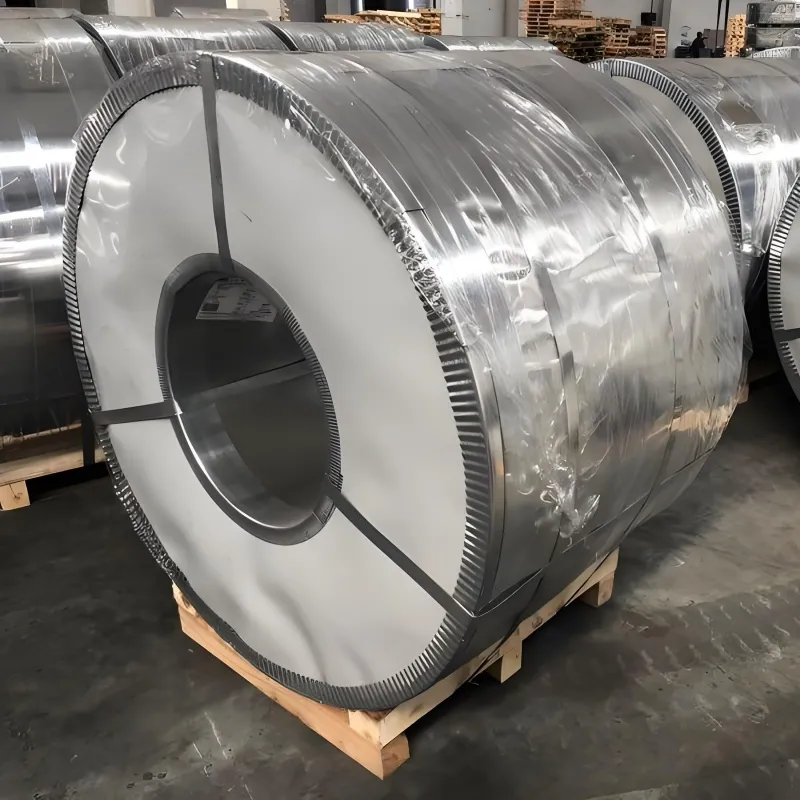
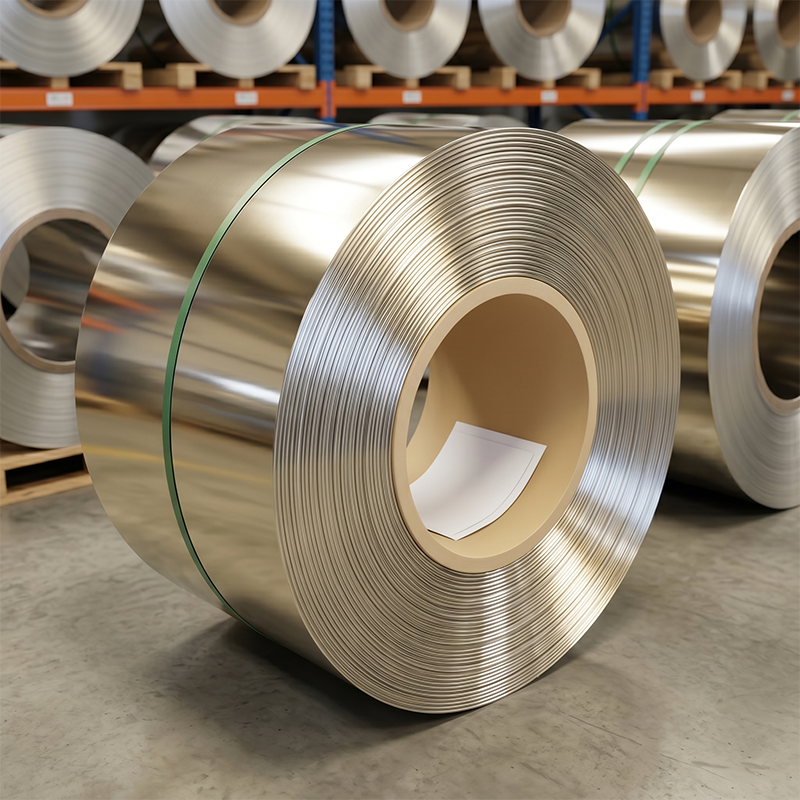
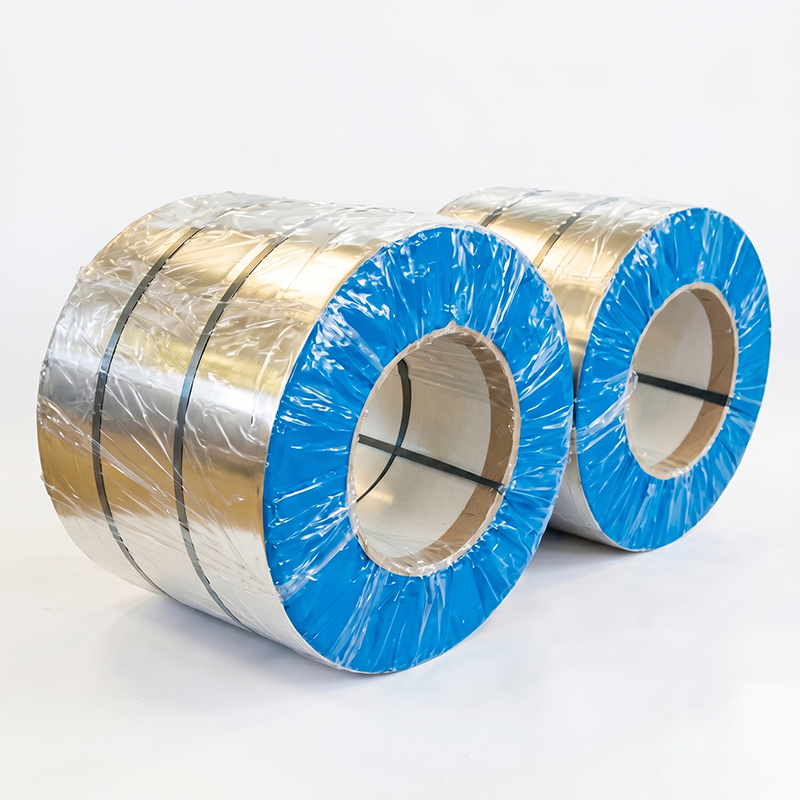
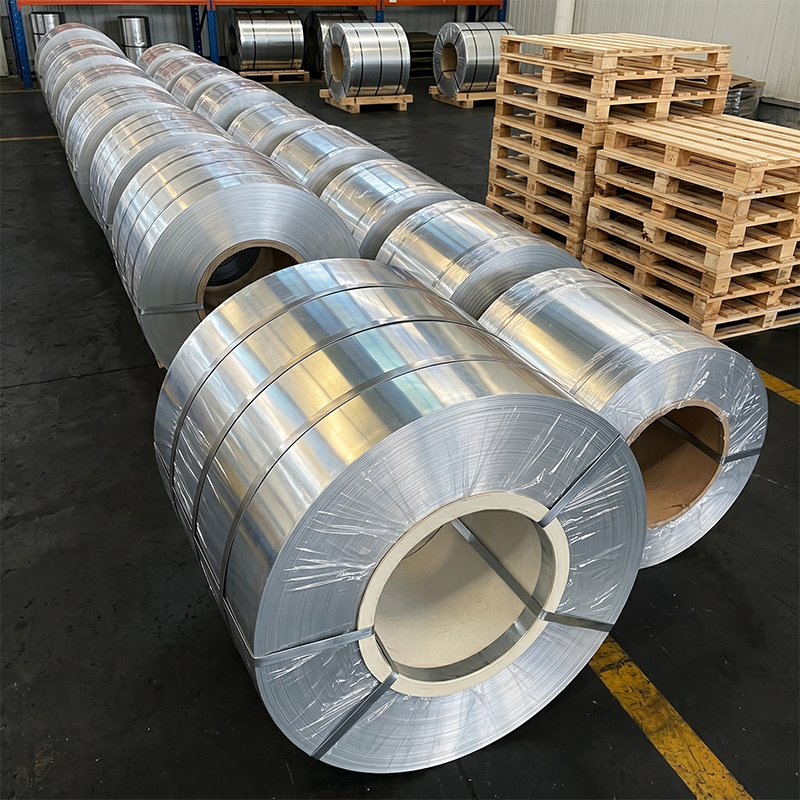
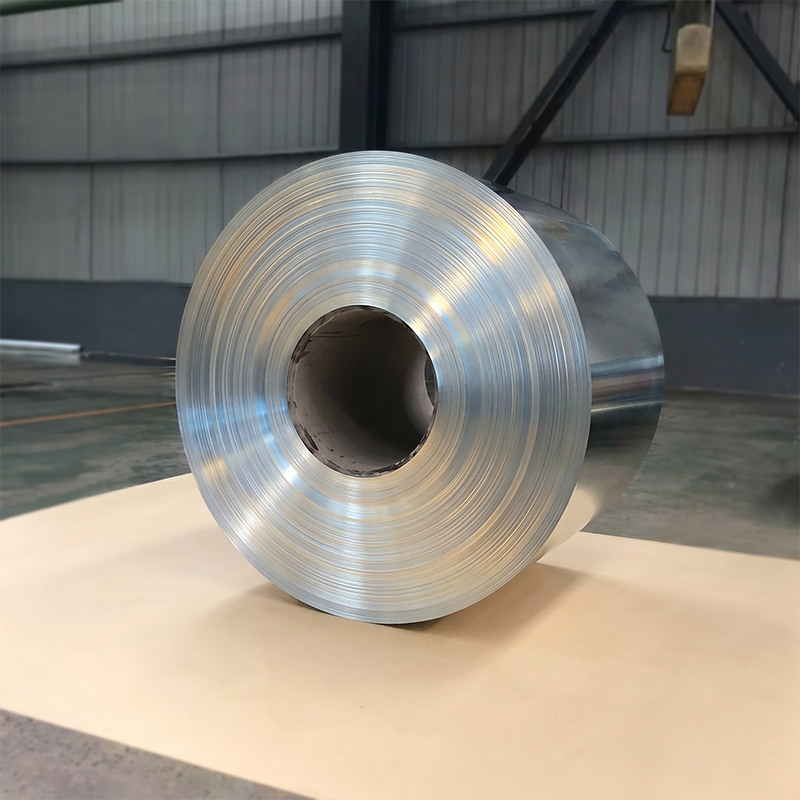
EN 10202 Tinplate – Electrolytic tinplate coil supplied for can making and metal packaging production.
SR & DR Options – Single-reduced and double-reduced material available for different forming requirements.
Custom Tin Coating – Equal and differential coating specifications can be selected according to the application.
Middle East Supply Support – Coil weight, packing and documentation can be adapted for GCC importers and can makers.
Complete Export Documents – MTC, COO and full commercial and shipping documentation available.
EN 10202 Tinplate Coil is a cold-reduced low-carbon steel product with an electrolytically deposited tin coating, manufactured for metal packaging applications requiring controlled thickness, mechanical properties, coating mass and surface condition.
Henan GDD supplies EN 10202 tinplate to can manufacturers, metal printing companies, end makers and packaging distributors serving Saudi Arabia, UAE, Oman, Qatar, Kuwait, Bahrain and other Middle East markets.
Rather than offering one generic specification, we review thickness, strength grade, tin coating, surface finish, coil dimensions and downstream processing together. This is particularly important for customers using high-speed printing, slitting, body-making or end-forming lines where small material differences can affect production efficiency.
EN 10202 is not presented as a universal mandatory standard for the Middle East. This product page is intended for buyers and projects that specifically require EN 10202 or use an EN-based technical specification.
| Item | Specification |
|---|---|
| Product Name | EN 10202 Tinplate Coil / Electrolytic Tinplate Coil |
| Applicable Standard | EN 10202:2022 or Agreed Edition / Customer Specification |
| Base Material | Cold-reduced Low-carbon Mild Steel |
| Coating | Electrolytically Deposited Tin |
| Reduction Type | Single Reduced (SR) / Double Reduced (DR) |
| SR Standard Thickness Range | 0.16 – 0.49 mm; Other Thicknesses Subject to Agreement |
| DR Standard Thickness Range | 0.12 – 0.29 mm; Other Thicknesses Subject to Agreement |
| Width | Typically 600 – 1250 mm or Customized According to Production Capability |
| Mechanical Grade | EN 10202 Strength-based Grades Selected According to Reduction, Annealing Route and Required Mechanical Properties |
| Common Grade References | TS230, TS245, TS260, TS275, TS290, TH415, TH435, TH520, TH550, TH580, TH620 or Other Applicable EN 10202 Grade |
| Common Tin Coating per Side | 2.80, 4.00, 5.00, 5.60, 8.40, 11.20 g/m² and Other EN 10202 Coating Values According to Specification |
| Equal Coating | Examples: 2.8/2.8, 5.6/5.6, 8.4/8.4 g/m² or Customized |
| Differential Coating | Examples: 2.8/5.6, 2.8/8.4, 5.6/8.4 g/m² or Customized |
| Surface Finish | Bright, Stone, Fine Stone, Silver, Matte or Agreed Surface Finish |
| Annealing | Batch Annealed / Continuous Annealed According to Required Grade and Production Route |
| Surface Treatment | Passivated, Lightly Oiled / DOS Oiled or Agreed Treatment According to Product Specification |
| Coil ID | 508 mm / 610 mm or Customized |
| Coil Weight | Typically 3 – 10 MT or Customized According to Uncoiler and Handling Requirements |
| Edge | Mill Edge / Slit Edge |
| Processing | Slitting, Cut-to-length, Scroll Cutting, Lacquering, Printing and Customized Packing |
| Applications | Food Can Bodies, Easy Open Ends, Conventional Ends, Closures, Printed Tins and General Metal Packaging |
| Inspection | Dimensions, Mechanical Properties, Tin Coating, Surface Condition, MTC Review and Third-party Inspection Where Required |
| Available Documents | MTC, Certificate of Origin, Export License Where Applicable, Commercial Invoice, Packing List, Bill of Lading and Customs Documents |
| Packing | Moisture-resistant Wrapping, Protective Steel Cover, Edge Protection, Steel Straps and Seaworthy Export Packing |
| Trade Terms | EXW, FOB, CFR, CIF |
Exact availability depends on thickness, width, mechanical grade, tin coating, surface finish and production route. The applicable EN 10202 edition and final acceptance requirements should be clearly stated in the purchase order.
EN 10202 is a European standard covering cold-reduced tinmill products supplied in sheet or coil form, including electrolytic tinplate.
For a can manufacturer, specifying EN 10202 provides a common technical framework for dimensions, mechanical properties, coating and other product requirements instead of relying only on general commercial descriptions such as "food grade tinplate" or "T4 tinplate."
Buyers should still identify the exact material required within the standard. EN 10202 alone does not define the final thickness, strength, coating, surface or coil weight for an individual order.
Middle East packaging companies source tinplate from different mills and countries. A recognized technical specification can make comparison between suppliers more consistent, particularly when a factory operates high-volume printing, slitting or can-making equipment.
EN 10202 is therefore relevant to customers that have already designed their raw-material specification around European tinmill terminology or need an EN-based specification for internal quality control.
It should not be assumed that every GCC importer requires EN 10202. JIS, ASTM, ISO and customer-specific specifications are also encountered in international tinplate trade.
Single-reduced tinplate receives its primary cold reduction before annealing and subsequent temper processing.
SR material is commonly selected where the finished component requires a useful balance between formability and rigidity.
Typical applications can include three-piece can bodies, general can components, printed tins and closures depending on the selected mechanical grade and thickness.
Customers should specify the required EN mechanical grade rather than relying only on legacy commercial terms such as T2, T3 or T4.
Double-reduced tinplate receives an additional cold-reduction operation after annealing, resulting in higher strength and stiffness at relatively thin gauges.
DR material is frequently considered where packaging engineers want to reduce metal thickness while maintaining required component rigidity.
It can be used for selected can bodies and can-end applications, but forming behavior is different from softer SR material. Directionality, tooling and component design should therefore be taken into account.
The correct mechanical grade depends on what the customer intends to manufacture.
A can body undergoing cylindrical forming and resistance welding has different forming requirements from an Easy Open End that undergoes precision stamping and scoring.
For new projects, buyers should provide component type, thickness, existing material grade and preferably an existing MTC. If the factory currently uses a JIS T-grade or DR designation, the target EN specification should be confirmed through mechanical-property requirements rather than assuming a direct one-to-one grade conversion.
Equal-coated tinplate uses approximately the same nominal tin coating on both sides of the strip.
Differential tinplate uses different nominal coating masses on the two surfaces. This can be useful when the internal and external sides of the finished package have different coating or corrosion-protection requirements.
When differential material is used, correct identification of the two surfaces is important during lacquering, printing and can conversion.
A higher tin coating provides more metallic tin, but coating mass alone does not determine the corrosion performance of a finished food can.
Internal lacquer, filling chemistry, acidity, salt, sulfur-containing ingredients, processing temperature, seam quality and storage conditions all influence package performance.
For this reason, a buyer should not select 2.8/2.8, 5.6/5.6 or another coating specification solely on the assumption that a higher number is always necessary.
Three-piece cans typically consist of a formed body and two ends. The body is commonly produced from flat tinplate blanks cut from coil or sheet.
After lacquering and printing where required, the body blank is formed into a cylinder and joined by electrical resistance welding.
Material selection should consider body diameter, can height, forming process, welding characteristics, internal lacquer and the customer's production speed.
For Middle East food can factories, common product categories include tomato products, vegetables, beans, fruit and other shelf-stable foods.
Easy Open Ends require precise interaction between tinplate strength, thickness, end geometry, score configuration and pull-tab design.
Higher-strength and double-reduced materials may be considered for selected end structures, but the final grade must match the customer's tooling and approved EOE design.
When replacing an existing tinplate source, supplying the current MTC and EOE specification can significantly reduce the risk of selecting material with different forming behavior.
Tomato paste is an important canned-food application across the Middle East and surrounding export markets.
Because tomato-based products are acidic, the complete package needs to be evaluated as a system. Tin coating, internal lacquer, weld protection, double seam, thermal processing and storage period all contribute to finished-can performance.
Henan GDD can supply EN 10202 Tinplate Coil together with related printed tinplate and can-end products according to the customer's procurement model.
Canned seafood, beans and vegetables have different filling chemistries, so one internal coating system should not automatically be used for every application.
Salt, sulfur compounds, oil, sauce and sterilization conditions can influence coating selection.
Buyers are encouraged to provide the intended filling product when requesting raw tinplate for a new can program, especially if lacquered or printed material will also be sourced.
Surface finish affects appearance and downstream printing characteristics.
Bright finishes provide a reflective metallic appearance, while stone and related textured finishes are common in general can manufacturing. Matte and silver-type surfaces can be considered for selected decorative packaging.
A customer running lithographic metal printing should specify both the visual finish and the printing process rather than selecting a surface only from photographs.
Metal printing companies typically convert master tinplate coils into flat sheets before lacquering and lithographic printing.
Their purchasing priorities often include flatness, surface cleanliness, coil width, coating consistency and reliable material identification.
When the printed sheet will later be formed into a welded can body, artwork layout must also account for trimming, welding margins and the final body-forming direction.
Coil width should be selected according to the customer's slitting, cut-to-length or printing layout rather than simply choosing the widest available coil.
Correct master width can improve material utilization and reduce side trimming.
Customers should provide required finished sheet or strip dimensions when they want Henan GDD to evaluate a more efficient master-coil width.
Coil weight affects handling, warehouse equipment and production-line compatibility.
A coil may meet the correct grade, thickness and width but still be unsuitable if it exceeds the customer's uncoiler or crane capacity.
Middle East customers using smaller converting lines sometimes request controlled maximum coil weights. This requirement should be stated before production because splitting coils after production may affect packing and delivery planning.
Tinplate is a precision metal-packaging material and should be protected from moisture and condensation even though its surfaces are tin coated.
High temperature does not by itself cause immediate tinplate failure, but rapid temperature changes and trapped moisture can create condensation during ocean transportation or warehouse handling.
Coils should therefore remain dry, protected from rain and stored in suitable indoor conditions. Packaging should not be removed prematurely when cold cargo enters a warm and humid environment.
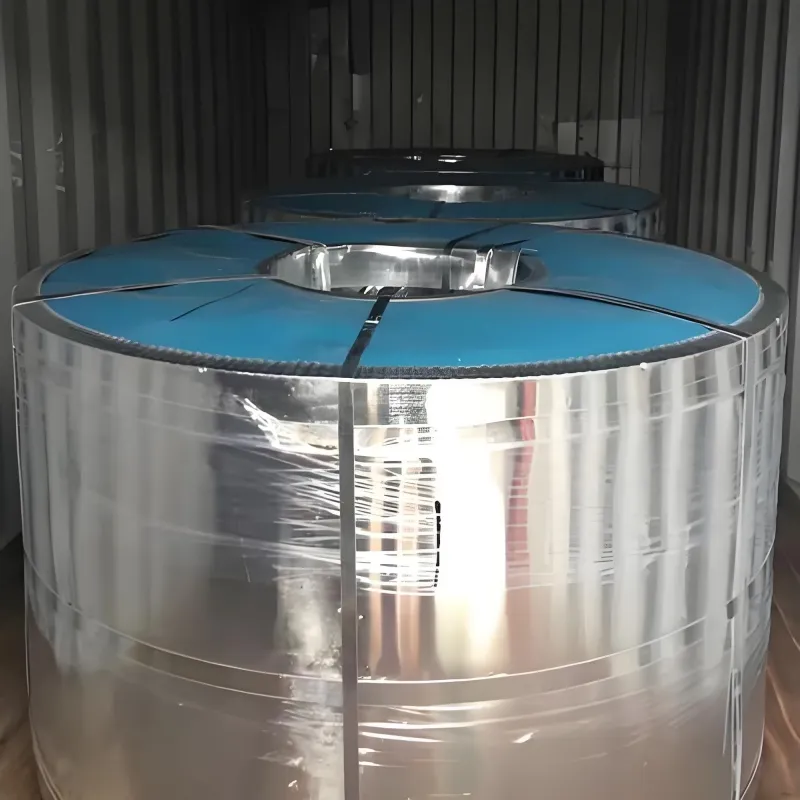
Export packing is designed to protect the coil surface and edges during handling, container loading and sea transportation.
A typical packing system can include moisture-resistant wrapping, protective steel sheets, inner and outer edge protectors, reinforced steel straps and suitable skids or supports.
Each coil can be identified with product grade, dimensions, tin coating, coil number, net weight and customer shipping marks according to the agreed packing specification.
A typical Saudi food-can producer purchasing EN-based tinplate may require material for three-piece can bodies used for tomato products, beans or vegetables.
During technical review, the key items are thickness, mechanical grade, tin coating, coil width, coil weight and compatibility with the customer's existing lacquer, printing and welding processes.
If the buyer is replacing another supplier, reviewing the current MTC is usually more reliable than matching only a commercial designation.
A UAE metal-packaging company may purchase master coils that are converted into lacquered and printed sheets before can fabrication.
Surface condition, flatness and printing compatibility become important in addition to the basic EN 10202 specification.
The buyer may also specify a controlled coil weight so that each coil is compatible with existing cut-to-length equipment.
A can-end producer may require higher-strength or double-reduced tinplate for conventional ends or selected Easy Open End structures.
In this application, mechanical behavior is particularly important because even material with the same nominal thickness can perform differently during stamping when the strength specification changes.
These examples describe typical procurement workflows. Customer names, confidential pricing and proprietary specifications are not published without authorization.
Once a tinplate specification has been approved on a production line, repeat buyers generally focus heavily on consistency between shipments.
Practical concerns include thickness stability, mechanical-property consistency, coating specification, surface appearance, coil width, maximum coil weight and packing condition.
Maintaining clear coil identification and corresponding MTC documentation also makes incoming inspection and batch traceability easier for can manufacturers.
A useful inquiry should contain more than "EN 10202 Tinplate Coil."
We normally review the standard edition, mechanical grade, reduction type, thickness, width, tin coating, surface finish, annealing requirement, coil ID, maximum coil weight, quantity and final application.
If the buyer currently uses another designation system, an existing MTC or purchase specification is useful for comparing mechanical properties and coating requirements.
This technical review helps reduce the risk of supplying material that is nominally similar but behaves differently on the customer's production line.
Two 0.20 mm tinplate coils can behave very differently if the mechanical grade or reduction route is different.
Terms such as T4 or DR8 are widely understood commercially, but buyers specifying EN 10202 should confirm the corresponding required mechanical properties rather than relying only on an approximate cross-standard label.
A coil heavier than the customer's decoiler or crane capacity can create an avoidable production problem even when every material parameter is correct.
Finished-can corrosion performance depends on the complete packaging system, including lacquer, filling chemistry, seam quality and processing conditions.
Incoming and pre-shipment inspection can cover coil dimensions, surface condition, identification, tin coating information and mechanical-property documentation according to the purchase specification.
Coil numbers and mill documentation support traceability between delivered material and the corresponding production batch.
Product photographs, coil-label photographs, packing photographs and container-loading photographs can be provided according to customer requirements.
The Mill Test Certificate is an important part of technical confirmation for EN 10202 material.
Depending on the supplied material and mill documentation, the MTC can include product designation, dimensions, coating information, mechanical properties and production identification.
Customers requiring specific data on the certificate should state those requirements before order confirmation rather than after material has already been produced.
Independent third-party inspection can be arranged according to the scope agreed in the purchase contract.
Inspection can include product identification, dimensions, surface condition, quantity, document review, packing and loading verification.
Additional laboratory testing should be confirmed before production so that the sampling method, test standard and acceptance criteria can be agreed in advance.
Henan GDD supports compliant international shipments with technical, commercial and customs documentation prepared according to contract and destination requirements.
Available documentation can include MTC, Certificate of Origin, export license where applicable, commercial invoice, packing list, bill of lading and customs declaration documents.
Inspection records, product photographs, packing photographs and loading photographs can also be supplied according to agreed requirements.
Special legalization, chamber endorsement and destination-specific import documentation should be confirmed before order placement.
Henan GDD supplies tinplate raw materials and related metal-packaging products to international can manufacturers, metal printers, closure producers and distributors.
For EN 10202 projects, we review material strength, thickness, coating, surface, coil dimensions and downstream use rather than quoting only by weight and nominal thickness.
Customers can send an existing MTC, technical specification or sample information for comparison before quotation.
Our related supply range includes SPTE Tinplate Coil, ETP Tinplate Sheet, printed tinplate, Easy Open Ends, Tinplate Lids and finished metal packaging products, allowing buyers to consolidate related sourcing where appropriate.
MTC, Certificate of Origin, export license where applicable and complete commercial and shipping documentation can be provided according to contract requirements.
Customers purchasing EN 10202 Tinplate Coil may also require SPTE Tinplate Coil, ETP Tinplate Sheet, printed tinplate, Easy Open Ends, Tinplate Lids and food-can components.
These products can be reviewed as part of one metal-packaging sourcing program when specifications and downstream applications are clearly defined.
It is cold-reduced tinmill steel supplied with an electrolytic tin coating according to EN 10202 requirements and used primarily for can making and metal packaging.
EN 10202 specifies standard nominal ranges of approximately 0.16–0.49 mm for single-reduced material and 0.12–0.29 mm for double-reduced material. Other thicknesses can be agreed where technically available.
SR material undergoes one primary cold-reduction stage before annealing, while DR material receives additional cold reduction after annealing and generally provides higher strength at thinner gauges.
Yes. Equal and differential coating specifications can be supplied according to EN 10202 requirements, application and production capability.
No. It should not be considered a universal mandatory regional standard. It is suitable for customers and projects that specifically specify EN 10202 or use an EN-based tinplate specification.
Yes. Maximum coil weight can be discussed according to the customer's uncoiler, crane and warehouse handling capability.
Yes. MTC, Certificate of Origin, export license where applicable, commercial invoice, packing list, bill of lading and other agreed export documents can be provided.
Please provide the EN 10202 edition, mechanical grade, SR or DR requirement, thickness, width, tin coating, surface finish, coil ID, maximum coil weight, quantity, final application, destination port and required documents.
Looking for EN 10202 Tinplate Coil for food cans, Easy Open Ends, metal printing or other can-making applications in Saudi Arabia, UAE, Oman, Qatar, Kuwait, Bahrain or other Middle East markets?
Send Henan GDD your required standard edition, mechanical grade, thickness, width, tin coating, surface finish, coil ID, maximum coil weight, quantity, destination port and documentation requirements.
If you are changing suppliers, you can also send your current MTC or purchase specification. Comparing the existing mechanical properties, coating and coil parameters is usually the most reliable starting point for an accurate quotation.