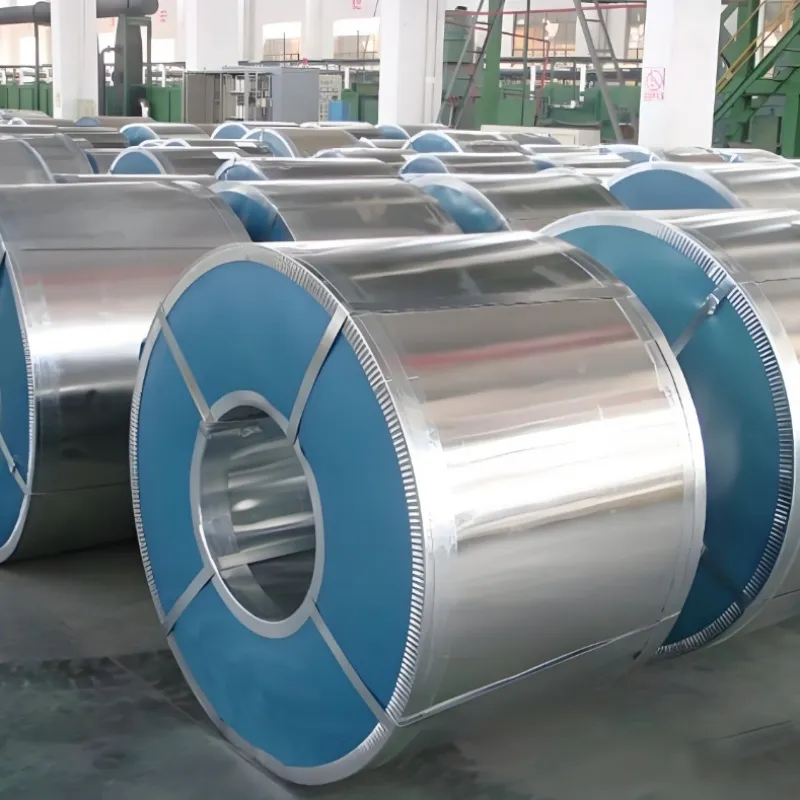
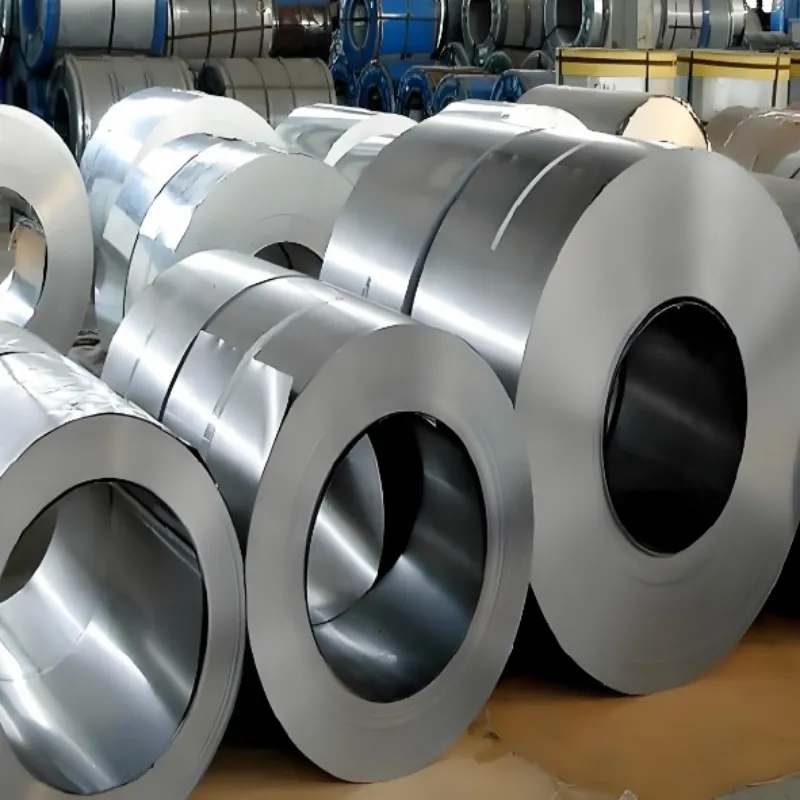
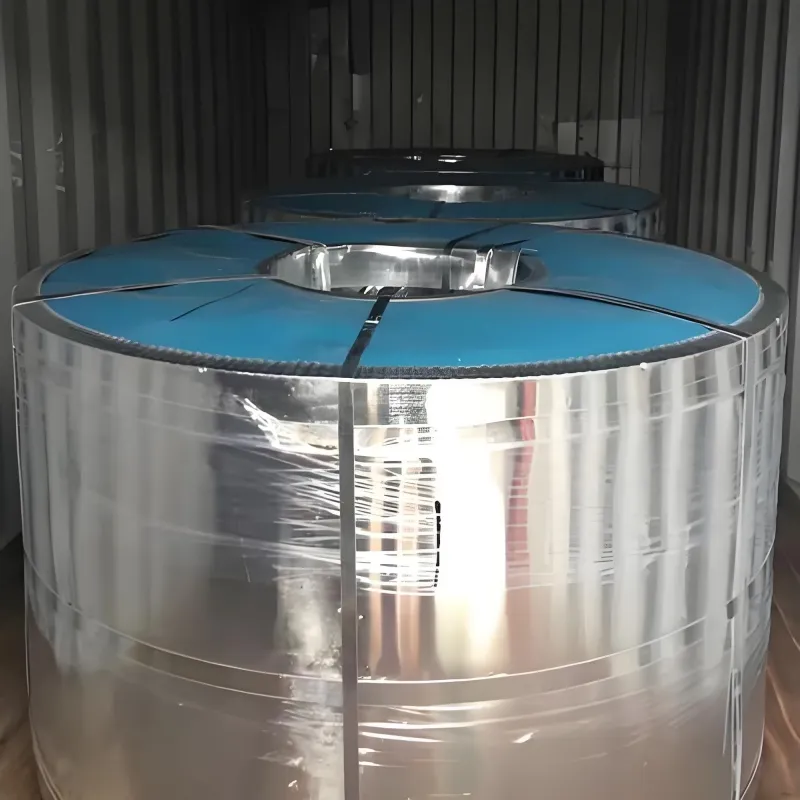
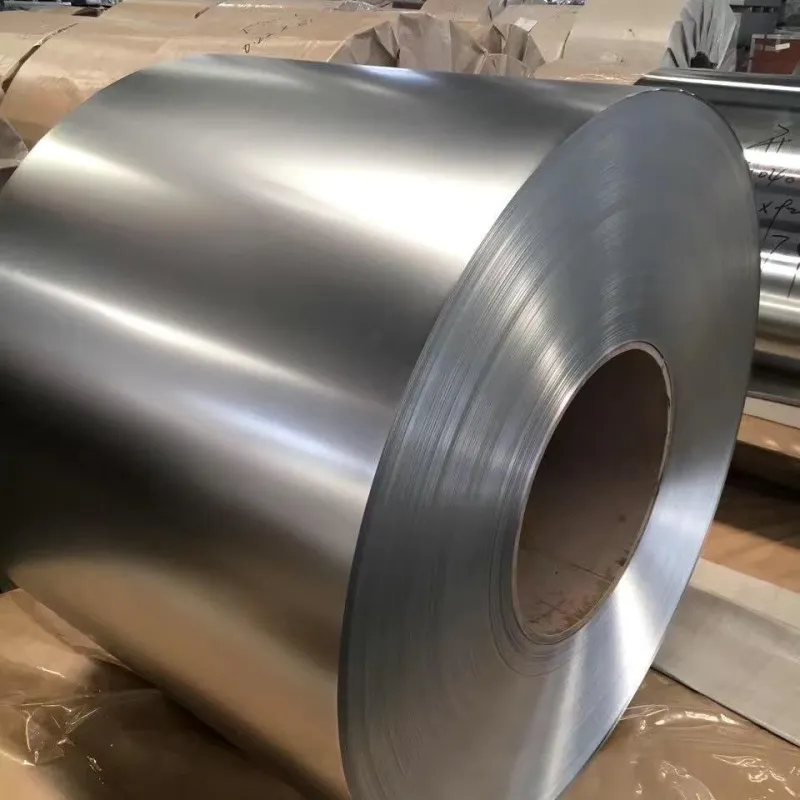
ETP Tinplate Coil – Electrolytic tin-coated steel for food cans, EOE lids and metal packaging.
Custom Tin Coating – Equal and differential tin coating options for different packaging requirements.
SR & DR Temper Grades – T1–T5, DR7–DR9 and customized mechanical properties available.
Can-making Ready – Suitable for slitting, printing, lacquering, stamping, welding and forming.
Complete Export Documents – MTC, COO, test reports and compliant shipping documents available.
ETP Tinplate Coil, also known as Electrolytic Tinplate Coil or SPTE, is manufactured from cold-rolled low-carbon steel that receives a controlled metallic tin coating through an electrolytic tinning process.
The steel substrate provides strength, stiffness and forming performance, while the tin-coated surface provides a suitable foundation for lacquering, lithographic printing, stamping, electrical resistance welding and other can-making operations.
Henan GDD supplies tinplate coils to food-can manufacturers, metal printers, Easy Open End producers, closure manufacturers and metal-packaging distributors. Thickness, coil width, temper, tin coating, surface finish, annealing route, coil weight and downstream processing can be customized according to the customer's production equipment and finished packaging.
| Item | Specification |
|---|---|
| Product Name | ETP Tinplate Coil / Electrolytic Tinplate Coil / SPTE Coil |
| Base Material | Cold Rolled Low-carbon Steel |
| Coating | Electrolytically Deposited Tin |
| Applicable Standards | ASTM A623/A624, JIS G3303, EN 10202, GB/T 2520 or Customer Specification |
| Thickness | 0.13 mm – 0.50 mm or Customized |
| Width | 600 mm – 1250 mm or Customized According to Production Capability |
| Single-reduced Temper | T1, T2, T2.5, T3, T4, T5 or Customized |
| Double-reduced Temper | DR7, DR8, DR8.5, DR9 or Customized |
| Equal Tin Coating | 1.1/1.1, 2.8/2.8, 5.6/5.6, 8.4/8.4, 11.2/11.2 g/m² or Customized |
| Differential Tin Coating | 2.8/5.6, 2.8/8.4, 5.6/8.4 g/m² or Customized |
| Surface Finish | Bright, Stone, Fine Stone, Silver, Matte or Customized |
| Annealing | BA Batch Annealed / CA Continuous Annealed According to Specification |
| Surface Treatment | Passivated, DOS Oiled, Lightly Oiled or Customized |
| Coil ID | 508 mm / 610 mm or Customized |
| Coil Weight | Approximately 3 – 10 MT or Customized According to Production and Shipping Requirements |
| Edge Condition | Mill Edge / Slit Edge |
| Processing Service | Slitting, Cut-to-length, Printing, Lacquering, Scroll Cutting and Customized Packing |
| FDA-related Test Support | Relevant Third-party Test Report Against Applicable FDA 21 CFR 175.300 Requirements Available According to Product and Report Scope |
| Quality Documentation | MTC, Dimensional Inspection, Tin Coating Verification, Surface Inspection and Third-party Inspection Support |
| Applications | Food Cans, Three-piece Can Bodies, Easy Open Ends, Conventional Ends, Closures, Printed Tins and Metal Packaging |
| Available Export Documents | MTC, Relevant Test Reports, Certificate of Origin, Export License Where Required, Commercial Invoice, Packing List, Bill of Lading and Customs Documentation |
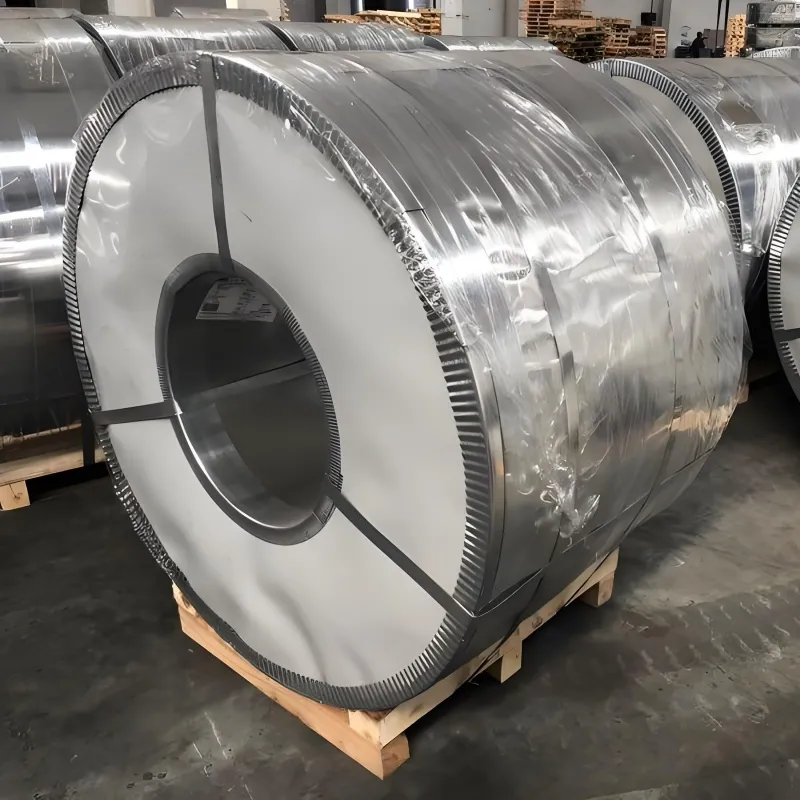
| Packing | Rust-resistant Paper, Steel Cover, Edge Protection, Steel Straps, Wooden Supports and Seaworthy Export Packing |
| Trade Terms | EXW, FOB, CFR, CIF |
Available dimensional ranges, tin coating weights, mechanical properties and coil weights depend on the applicable standard, mill production route and order quantity. Final specifications should always be confirmed through the purchase contract and Mill Test Certificate.
ETP stands for Electrolytic Tinplate. It is produced from carefully prepared cold-rolled low-carbon steel that receives metallic tin on both surfaces through an electrolytic deposition process.
Tinplate should not be viewed simply as ordinary steel with a decorative tin layer. Its steel chemistry, rolling reduction, annealing, temper rolling, surface roughness, tin coating weight and final surface treatment are all controlled according to the intended packaging application.
These variables influence forming performance, stiffness, welding behavior, printing quality and the suitability of the material for different can-making processes.
Production normally begins with cold-rolled steel strip manufactured to the required gauge and mechanical properties.
The strip is cleaned and prepared before entering the electrolytic tinning line, where controlled quantities of tin are deposited on one or both surfaces.
Depending on the required specification, the deposited tin can undergo subsequent treatment to obtain the desired surface appearance and coating structure.
Passivation and controlled oiling are normally applied at the final stage before inspection, coiling and packing.
A finished tinplate product consists of several functional layers rather than only the base steel and visible metallic tin.
The cold-rolled steel substrate provides mechanical strength. An iron-tin alloy layer forms between the substrate and metallic tin, while the deposited tin creates the characteristic tinplate surface.
Surface treatment and a controlled oil film support downstream handling and processing.
Single-reduced tinplate is manufactured through primary cold reduction followed by annealing and temper rolling.
Common temper designations include T1, T2, T2.5, T3, T4 and T5. Increasing temper generally corresponds to increased hardness and stiffness within the applicable material system.
Single-reduced material is widely used for food-can bodies, drawn components, general closures and printed metal packaging.
Double-reduced tinplate receives additional cold reduction after annealing, allowing a thinner gauge to achieve comparatively high strength.
Typical DR grades include DR7, DR8, DR8.5 and DR9 according to the applicable specification.
DR material can support lightweight packaging designs but has different forming characteristics from conventional single-reduced tinplate.
Production tooling and forming direction should therefore be evaluated carefully when changing from SR to DR material.
Selecting the correct temper is one of the most important steps in tinplate procurement.
Material that is too soft may not provide sufficient panel stiffness, while excessively hard material can create difficulties during forming, flanging or drawing.
Buyers should specify the finished component, thickness, forming depth, production process and mechanical requirements instead of selecting a temper only according to price.
Equal-coated tinplate uses approximately the same nominal tin coating weight on both sides of the steel strip.
Common examples include 2.8/2.8 g/m² and 5.6/5.6 g/m².
Equal coating is convenient for applications where the inside and outside surfaces require similar tin coating specifications.
Differential tinplate applies different nominal tin coating weights to the two sides.
For example, one side may receive a heavier tin coating while the opposite side uses a lighter coating according to functional and economic requirements.
Correct identification of the heavy- and light-coated sides is important during printing, lacquering and can manufacturing.
Tin coating should be selected according to the finished package, internal lacquer, external coating, manufacturing process and customer's technical specification.
Increasing tin coating should not automatically be interpreted as making every packaging system suitable for every food product.
For food cans, overall package performance depends on the combination of tinplate specification, lacquer system, filling product, seaming quality and processing conditions.
Bright tinplate provides a smooth and reflective surface and is commonly selected for printed cans and decorative packaging.
Stone finish provides a controlled textured appearance and is widely used in general can-making applications.
Fine Stone provides a finer texture for applications requiring a more uniform visual appearance.
Silver-type surfaces provide a distinctive metallic appearance that can be incorporated into decorative packaging designs.
Matte tinplate reduces surface reflection and can provide a specialized appearance for selected packaging products.
BA means Batch Annealed, sometimes also described as Box Annealed, while CA means Continuous Annealed.
These terms describe the annealing route used to develop mechanical properties in the steel substrate. They should not be confused with Bright surface finish.
Batch annealing and continuous annealing produce different combinations of mechanical characteristics depending on grade, rolling reduction and production route.
The appropriate route should be selected according to the customer's forming and performance requirements.
Three-piece food cans normally consist of a resistance-welded body, bottom end and top end.
ETP Tinplate Coil can be slit and cut into precise body blanks before lacquering and printing.
The body blank is formed into a cylinder and joined with electrical resistance welding. The body is subsequently flanged so that top and bottom ends can be attached through double seaming.
Suitable tinplate thickness, temper and coating should be selected according to can diameter, height, required body strength and processing conditions.
Suitable tinplate grades can be used for selected conventional ends and Easy Open End components.
Can-end production requires dimensional stability, controlled hardness and good stamping performance because the material undergoes multiple forming operations.
The final material selection should be matched with end diameter, score design, manufacturing tooling and seaming requirements.
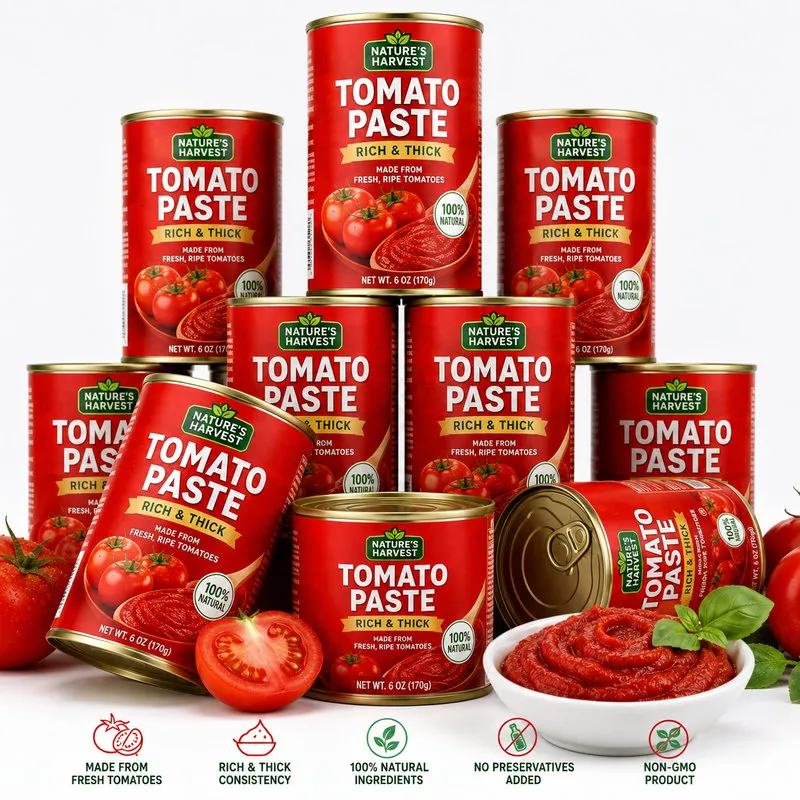
Tomato paste cans are a major application for three-piece tinplate packaging.
External surfaces can be lithographically printed with customer branding, while the internal coating should be selected according to the acidic nature of tomato products and the customer's filling and thermal-processing conditions.
Tinplate specifications should therefore be confirmed together with the finished can design rather than treating the raw steel specification independently.
Seafood packaging can use ETP Tinplate for can bodies and selected end components according to the package design.
Coating requirements may differ depending on whether the seafood is packed in oil, brine, tomato sauce or other filling media.
Customers developing seafood packaging should provide filling-product and processing information when confirming the internal lacquer and material specification.
Tinplate is widely used for canned fruits, vegetables, beans, sweet corn, mushrooms and similar processed foods.
Material gauge and temper can be matched with can dimensions and required mechanical performance, while internal coatings should be selected according to the packaged product.
Tinplate provides an excellent metallic substrate for offset lithographic printing.
The coil can first be converted to sheets, followed by lacquering, white base coating where required, multi-color printing and protective overprint varnish.
CMYK, spot colors, logos, food photographs and metallic visual effects can be produced according to customer artwork.
Food-contact packaging often uses an internal coating between the packaged food and the metal surface.
Coating selection depends on factors such as acidity, sulfur compounds, salt concentration, oil content, sterilization temperature and expected storage conditions.
Tomato products, seafood and fruit products can have different coating requirements even when the same basic tinplate is used.
Customers should provide filling-product information and processing conditions before confirming the final lacquer system.
Henan GDD can provide relevant third-party testing documentation for applicable tinplate materials according to the corresponding product and available report scope.
Test documentation against applicable FDA 21 CFR 175.300 requirements can be provided where the supplied material corresponds to the scope of the relevant inspection report.
For transparent compliance communication, this documentation should be described as a test or inspection report against the referenced requirements rather than as an FDA-issued product certification.
Customers should provide their destination market, packaged product and specific compliance requirements before order confirmation so that the available documentation can be reviewed for the intended application.
Tinplate buyers in Middle Eastern markets commonly include food-can factories, tomato paste can manufacturers, metal printing companies, edible-food packaging producers and packaging-material distributors.
When supporting customers in markets such as Saudi Arabia, the United Arab Emirates, Oman and other Gulf and Middle Eastern destinations, technical confirmation normally focuses on tinplate thickness, temper, tin coating, coil width, coil weight, internal coating compatibility and downstream printing or can-making equipment.
Export packing is also particularly important for long-distance sea transportation. Tinplate coils require protection against moisture, salt-laden air, coil-edge impact and uncontrolled movement during container transportation.
For buyers producing printed food cans, artwork language, food-can dimensions, welding allowance, can-end compatibility and destination-specific documentation should be confirmed before mass production.
A typical Middle East food-can project begins with the buyer providing the finished can dimensions, packaged product, required tinplate thickness, temper, tin coating and monthly or annual consumption.
For a tomato paste, beans or seafood can project, Henan GDD can review whether the customer's existing material specification corresponds with the intended can-body or can-end application.
The next stage normally confirms coil width, coil weight, inner diameter and slitting requirements so that the supplied material is compatible with the customer's production line.
Before shipment, MTC, packing details, coil identification and required export documents can be reviewed. Product, packing and loading photographs can also be provided to improve shipment traceability.
For E-E-A-T and commercial transparency, specific customer names, confidential purchase prices and order quantities are not published without customer authorization.
One common purchasing mistake is specifying only thickness and tin coating while ignoring temper. Two coils with the same dimensions can behave differently during forming when their mechanical properties are different.
Another mistake is assuming that a heavier tin coating automatically solves every corrosion issue. Food-can performance also depends on lacquer selection, filling product, thermal processing and storage conditions.
Buyers should also distinguish between BA and Bright finish. BA refers to Batch Annealing, while Bright describes a surface finish.
Differential tin coating must also be correctly oriented during downstream processing so that the intended coating side faces the correct surface of the finished package.
A professional tinplate quotation should begin with the finished application rather than only a general request for "tinplate coil."
Henan GDD normally reviews the product application, thickness, width, temper, tin coating, surface finish, annealing requirement, coil weight and required quantity.
For food-can applications, additional information such as food type, can dimensions, body or lid application and downstream coating requirements can improve specification accuracy.
For customers replacing an existing supplier, an existing MTC or technical specification can be used as an important reference during quotation.
Tinplate master coils can be slit into narrower widths according to the customer's production requirements.
Slitting accuracy and edge condition are important because excessive burrs can affect downstream handling, printing and stamping.
Customers using high-speed production lines should provide width tolerances, coil weight limitations, inside diameter and other equipment restrictions before processing.
ETP coils can also be converted into flat sheets according to can-body, printing or stamping layouts.
Customized sheet dimensions can improve raw-material utilization for food cans, EOE lids and decorative packaging.
Customers can provide the finished blank size or existing sheet dimensions for quotation.
Quality control begins with confirming that the supplied coil corresponds to the approved purchase specification.
Inspection can include thickness, width, coil weight, temper-related mechanical properties, tin coating, surface condition, edge quality and packaging condition.
Coil identification and mill documentation help maintain traceability between the delivered material and the corresponding production batch.
MTC, dimensional inspection records, product photographs, packing photographs and loading photographs can be provided according to the contract.
A Mill Test Certificate provides important information for material verification and quality traceability.
Depending on the mill and applicable standard, documentation can include material designation, dimensions, temper or mechanical-property information, tin coating specification, production identification and other relevant test results.
Buyers requiring specific MTC content should confirm the requirement before order placement.
Independent third-party inspection can be arranged according to the scope agreed in the purchase contract.
Inspection may cover dimensions, quantity, surface appearance, packing, product identification and documentation review.
Where specific laboratory testing is required, the applicable standard, sample method and acceptance criteria should be confirmed before production.
Henan GDD can provide technical, commercial and customs documentation according to the destination country and agreed trade terms.
Available documentation can include MTC, relevant third-party test reports, Certificate of Origin, export license where required, commercial invoice, packing list, bill of lading and customs declaration documents.
Product photographs, inspection photographs, packing photographs and container-loading photographs can also be provided according to customer requirements.
Destination-specific legalization, chamber certification, customs requirements and other special documents should be confirmed before order placement.
Tinplate requires careful protection because the surface is sensitive to moisture, scratches, edge damage and uncontrolled handling.
Export coils can be protected using rust-resistant or waterproof wrapping, steel covers, inner and outer edge protectors, reinforced steel straps and supporting skids.
Secure container loading is especially important for heavy coils. Coil positioning and reinforcement should reduce movement during inland and ocean transportation.
Packing marks can include material specification, dimensions, coil number, net weight, gross weight and customer identification as agreed.
Henan GDD supplies tinplate materials to food-can manufacturers, metal printers, Easy Open End factories, closure manufacturers and international packaging distributors.
Our supply scope can include ETP Tinplate Coil, Tinplate Sheet, printed tinplate, food cans, conventional can ends and Easy Open Ends.
We support customized thickness, width, temper, tin coating, surface finish, coil weight, slitting and cut-to-length processing.
Technical specifications can be reviewed against customer drawings, existing MTCs and downstream can-making requirements before order confirmation.
MTC, relevant testing documentation, Certificate of Origin, export license where required and complete commercial and shipping documentation can be arranged according to contract requirements.
ETP Tinplate Coil is cold-rolled low-carbon steel coated with metallic tin using an electrolytic plating process for packaging and can-making applications.
SPTE is a commonly used designation for electrolytic tinplate steel. In commercial tinplate purchasing, ETP and SPTE are frequently used to describe the same general product category.
A common supply range is approximately 0.13 mm to 0.50 mm, subject to grade, width, production route and order requirements.
Common widths are approximately 600 mm to 1250 mm, while customized widths and slit coils can be discussed according to production capability.
Common specifications include 2.8/2.8, 5.6/5.6 and other equal or differential tin coating combinations according to customer requirements.
Differential coating means that the two sides of the tinplate receive different nominal tin coating weights.
Single-reduced grades such as T1 through T5 and double-reduced grades such as DR7, DR8 and DR9 can be discussed according to the required application.
SR tinplate is single reduced, while DR tinplate receives an additional cold-reduction stage after annealing and generally provides higher strength at a relatively thin gauge.
BA means Batch Annealed or Box Annealed. It describes the annealing process and should not be confused with Bright surface finish.
Yes. Properly specified ETP Tinplate Coil is widely used for food-can bodies and selected can-end applications.
Suitable tinplate grades can be used for selected EOE production according to the required end design, diameter, strength and forming specification.
Yes. Tinplate for tomato paste can bodies and selected end components can be supplied according to the customer's can dimensions, coating system and production requirements.
Yes. Tinplate can be converted into sheets, lacquered and lithographically printed with custom artwork, logos, food graphics and packaging information.
Relevant third-party test documentation against applicable FDA 21 CFR 175.300 requirements can be provided according to the corresponding product and report scope.
No. It should be described as a third-party test or inspection report against the referenced requirements rather than as an FDA-issued product certification.
Yes. Mill Test Certificates can be provided according to the corresponding material and order requirements.
Yes. Certificate of Origin can be arranged according to destination and contract requirements.
Export license documentation can be provided where applicable, together with commercial invoice, packing list, bill of lading and other agreed customs documents.
Yes. Tinplate specifications, seaworthy packing and export-document requirements can be prepared for customers in Saudi Arabia, the UAE, Oman and other Middle Eastern destinations according to project requirements.
Please provide thickness, width, temper, tin coating, surface finish, coil ID, coil weight, application, quantity, destination port and required documentation.
Yes. Slitting can be arranged according to the required width, tolerance and downstream production equipment.
Yes. Third-party inspection can be arranged according to the inspection scope agreed in the purchase contract.
Looking for ETP Tinplate Coil for food cans, Easy Open Ends, metal printing, closures or other packaging production?
Send Henan GDD your required thickness, width, temper, tin coating, surface finish, coil ID, coil weight, application, quantity, destination port and required documentation.
If you already use tinplate from another supplier, you can also provide your current MTC or technical specification for comparison.
Our team can support material review, quotation, production coordination, processing, quality inspection, export documentation, seaworthy packing and international shipment.