
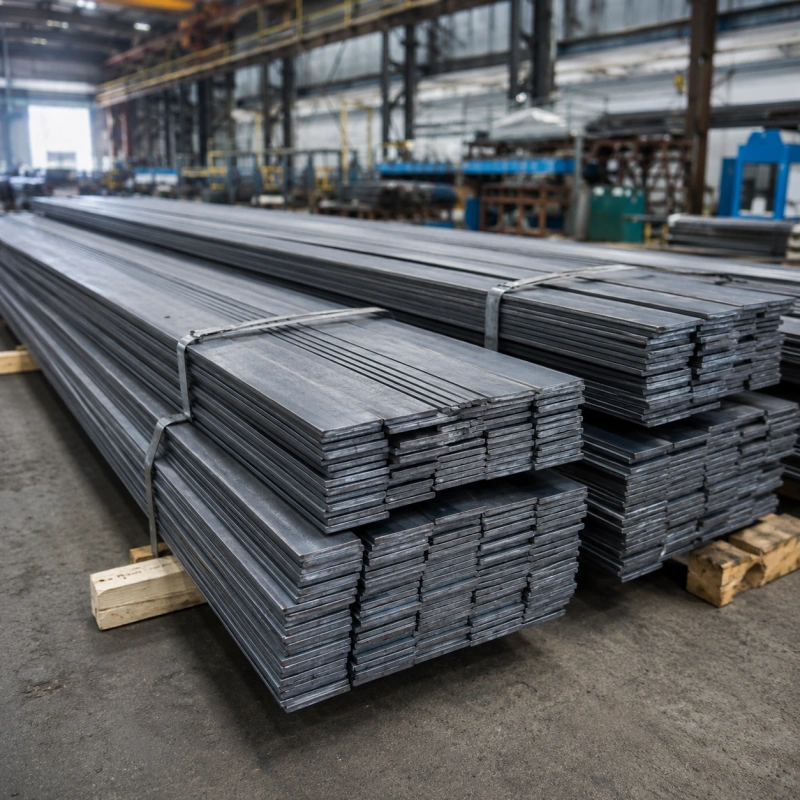
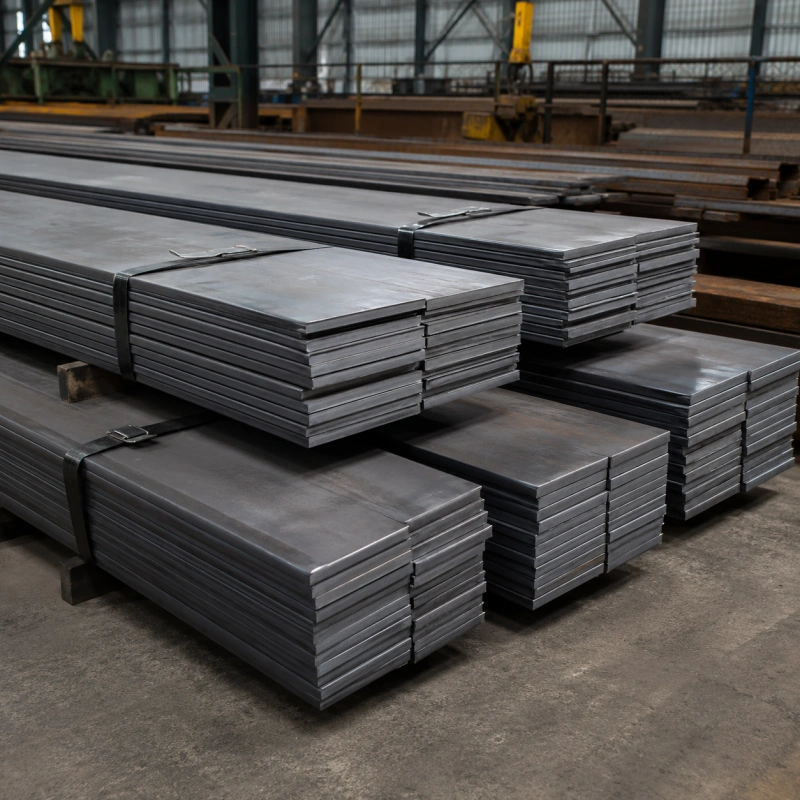
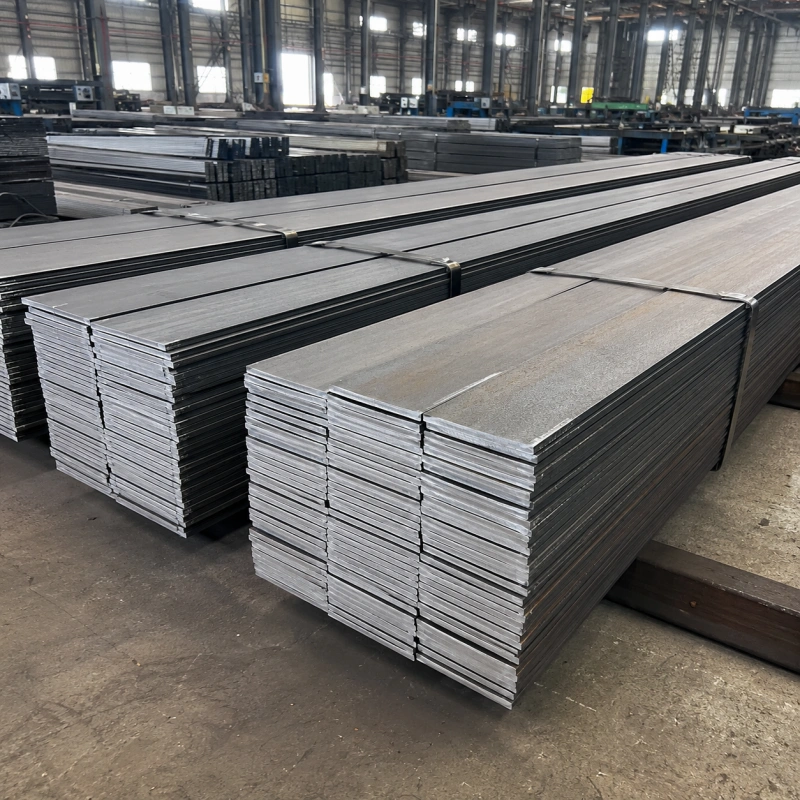
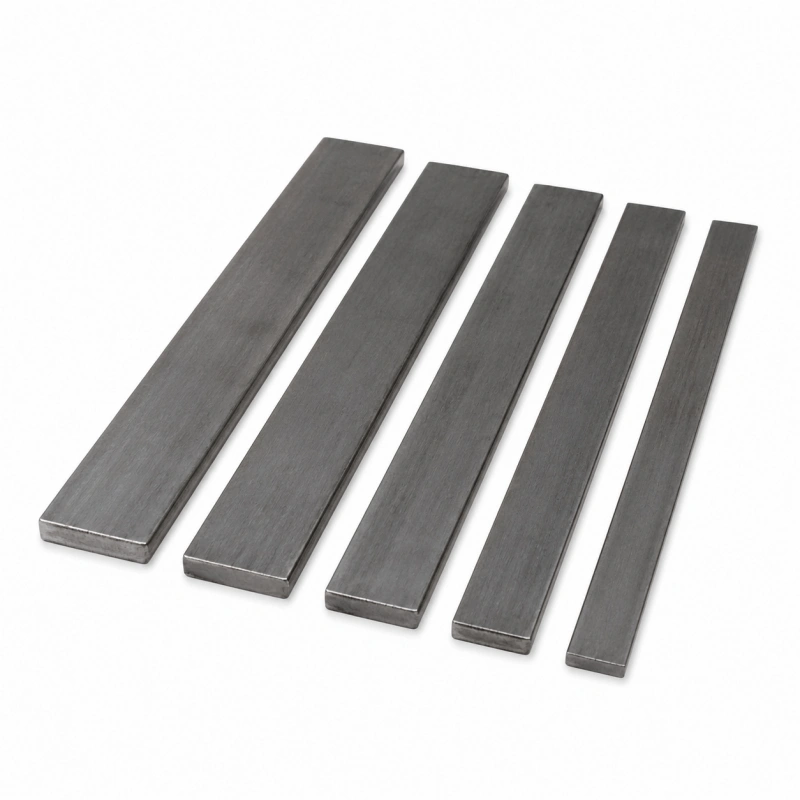
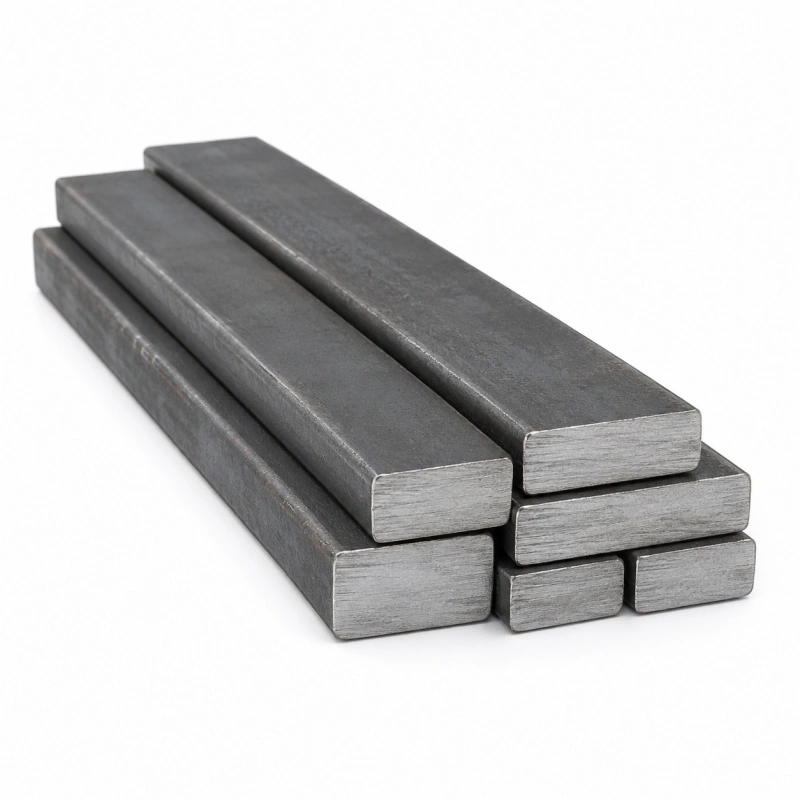
Carbon Steel Flat Bar – Solid rectangular steel profile for structural fabrication.
Multiple Steel Grades – Q235B, Q355B, SS400, S355JR and ASTM A36 available.
Custom Dimensions – Width, thickness, length and tolerances can be customized.
Processing Support – Cutting, drilling, punching, welding and galvanizing available.
Complete Export Documents – COO, MTC, export license and shipping documents available.
Carbon steel flat bar is a solid steel profile with a rectangular cross section. It provides practical structural strength, reliable weldability and economical processing performance for machinery, construction, agricultural equipment and general fabrication.
Its straight edges and flat surfaces make it convenient for welding, drilling, punching, bolting, bending and connection with steel plates, angles, channels, pipes and other structural components.
Henan GDD supplies hot rolled, cold drawn, slit and sheared carbon steel flat bars in multiple grades, dimensions and surface conditions. Customized cutting, drilling, punching, painting, galvanizing and drawing-based fabrication can be arranged according to customer requirements.
| Item | Specification |
|---|---|
| Product Name | Carbon Steel Flat Bar / Mild Steel Flat Bar / Rectangular Steel Bar |
| Common Grades | Q195, Q215, Q235B, Q355B, SS400, S235JR, S275JR, S355JR, ASTM A36, ASTM A572 Grade 50 or Customized |
| Applicable Standards | ASTM A36, ASTM A572, EN 10025, EN 10058, JIS G3101, GB/T 702 or Customer Specification |
| Production Method | Hot Rolled, Cold Drawn, Slit from Coil, Sheared from Plate or Customized |
| Width | 10 mm – 300 mm or Customized |
| Thickness | 2 mm – 60 mm or Customized |
| Length | 3 m, 5.8 m, 6 m, 9 m, 12 m or Customized |
| Surface Condition | Black, Pickled, Oiled, Shot Blasted, Primer Painted, Galvanized or Customized |
| Edge Condition | Mill Edge, Slit Edge, Sheared Edge, Rounded Edge, Deburred Edge or Machined Edge |
| Dimensional Tolerance | According to Applicable Standard or Customer Drawing |
| Processing Service | Cutting, Drilling, Punching, Bending, Welding, Machining, Painting and Galvanizing |
| Inspection | MTC, Dimension Inspection, Surface Inspection, Mechanical Test and Third-party Inspection |
| Applications | Machinery Frames, Brackets, Supports, Steel Grating, Fencing, Construction and Agricultural Equipment |
| Available Documents | MTC, Certificate of Origin, Export License Where Applicable, Commercial Invoice, Packing List, Bill of Lading and Customs Documents |
| Packing | Steel Strip Bundles, Waterproof Wrapping, Wooden Supports or Customized Export Packing |
| Trade Terms | EXW, FOB, CFR, CIF |
Available dimensions, tolerances and mechanical properties may vary according to the selected grade, production method and applicable standard. Final specifications should be confirmed through the purchase order, approved drawing and material certificate.
Carbon steel flat bar is a solid rectangular steel section manufactured by hot rolling, cold drawing, slitting steel coil or shearing steel plate.
It is sometimes called mild steel flat bar, flat steel, rectangular steel bar or flat iron. The exact terminology may depend on the grade, production method and local market.
Carbon steel flat bar is widely selected because it is easy to weld, cut, drill, bend and machine. It can be used as a finished structural member or processed into brackets, supports, frames and other components.
Hot rolled flat bar is manufactured at elevated temperatures and is widely used for construction, machinery, steel grating, frames and general structural fabrication.
It normally has a black mill surface with visible scale. Pickling, shot blasting, painting or galvanizing can be arranged when additional surface preparation is required.
Cold drawn flat bar normally provides tighter dimensional tolerances, improved straightness, cleaner edges and a smoother surface than conventional hot rolled products.
It is suitable for precision machinery, equipment parts, guide rails, brackets and components requiring more accurate dimensions.
Slit flat bar is produced by cutting steel coil into narrow strips. It is commonly selected for thinner dimensions, light structural supports, furniture components and continuous production requirements.
Sheared flat bar is cut from steel plate and provides flexibility for thicker products, wider sections and customized dimensions.
Carbon steel flat bar can receive hot dip galvanizing or another zinc coating process to improve corrosion protection for fencing, outdoor structures, supports and utility projects.
Q235B is a commonly used structural carbon steel grade offering practical strength, weldability and economical cost for construction, machinery and general fabrication.
Q355B provides higher yield strength than Q235B and is suitable for structural components requiring increased load capacity or reduced material weight.
ASTM A36 is widely used for structural fabrication, machinery frames, brackets, supports, agricultural equipment and general engineering projects.
ASTM A572 Grade 50 provides higher minimum yield strength than ordinary mild steel and can be selected for demanding structural applications.
SS400 is a common JIS structural steel grade used for construction, machinery parts, welded frames and general-purpose steel fabrication.
S235JR and S355JR are commonly specified for European structural projects. Grade selection depends on required yield strength, impact performance and design standard.
Carbon steel flat bars are widely used for machinery frames, equipment bases, mounting brackets, supports, stiffeners and reinforcement components.
In construction, they are used for steel structures, gates, fences, stair systems, handrail components, building frames, connection plates and support members.
Steel grating manufacturers use flat bars as load-bearing bearing bars and cross components for industrial platforms, walkways, drainage covers and access systems.
Agricultural and transportation equipment manufacturers use carbon flat bars for trailers, machinery frames, tool supports, vehicle components and farm equipment.
Other applications include shelving, furniture frames, brackets, clamps, blades, guide rails, metalwork and general welded fabrication.
The solid rectangular cross section provides practical strength and rigidity for frames, supports, brackets and reinforcement members.
Carbon steel flat bar generally provides a cost-effective solution for structural and industrial applications that do not require stainless steel corrosion resistance.
Common mild steel grades can be welded using standard industrial welding processes when suitable procedures and consumables are used.
Flat bars can be cut, drilled, punched, bent, machined, welded, painted and galvanized into finished project components.
Different steel grades, widths, thicknesses, lengths and surface conditions can be selected according to project requirements.
Standardized flat bar sizes support efficient fabrication, repeatable processing and economical procurement for industrial production.
Hot rolled flat bar is widely available, economical and suitable for construction, steel grating, frames and general structural use.
Cold drawn flat bar normally provides tighter tolerances, improved straightness, a smoother surface and more accurate cross-sectional dimensions.
Hot rolled products are generally preferred for standard structural fabrication, while cold drawn bars are selected for precision components and machining applications.
Slit flat bar is produced from steel coil and is commonly suitable for thinner sections, longer production runs and continuous manufacturing.
Sheared flat bar is cut from steel plate and can provide more flexibility for thick, wide or customized sections.
Slit and sheared edges may require deburring, grinding or machining when the finished product requires smooth or precision edges.
Carbon steel flat bar provides economical structural strength and good fabrication performance. It normally requires oiling, painting, galvanizing or another coating when exposed to moisture or corrosive environments.
Stainless steel flat bar contains alloying elements that provide integral corrosion resistance and a cleaner metallic appearance.
Carbon steel is generally selected for cost-sensitive structural projects, while stainless steel is preferred for food equipment, chemical processing, marine environments and decorative applications.
Flat bar is supplied as a finished rectangular profile with a controlled width, thickness and length. It is generally ready for cutting, drilling, welding or installation.
Steel plate strip may be cut from a larger plate and can require additional edge finishing, leveling or dimensional processing.
The correct option depends on the required dimensions, tolerances, surface condition, edge quality, order quantity and fabrication process.
Black flat bar retains the typical hot rolled mill scale surface and is suitable for general fabrication where further cleaning or coating will be performed.
Pickling removes surface scale, while oiling provides temporary protection against rust during storage and processing.
Shot blasting prepares the steel surface for painting, coating and structural fabrication by removing loose scale and surface contamination.
Primer painting can provide temporary corrosion protection during transportation, fabrication and installation.
Hot dip galvanizing provides a zinc coating for improved outdoor corrosion protection. Venting, drainage and dimensional requirements should be evaluated before galvanizing fabricated components.
Henan GDD can arrange cutting according to customer-required production or installation lengths. Saw cutting, flame cutting, laser cutting and other suitable methods can be discussed according to thickness and tolerance.
Drilling, punching, bending, welding, machining, painting and galvanizing services can be arranged for brackets, frames, supports and drawing-based components.
Customers should provide drawings showing steel grade, width, thickness, length, hole diameter, hole position, tolerance, surface treatment and quantity.
Carbon steel flat bar can be welded using common processes such as shielded metal arc welding, gas metal arc welding and submerged arc welding where suitable.
The welding procedure should match the steel grade, thickness, joint design, loading condition and service environment. Higher-strength grades may require additional control of preheating, heat input and consumables.
Welded components should be inspected and receive suitable post-weld cleaning and corrosion protection according to project requirements.
Selection should consider steel grade, production method, width, thickness, length, dimensional tolerance, edge condition, surface treatment and final application.
Q235B, SS400, S235JR and ASTM A36 are widely used for general structural fabrication. Q355B, S355JR and ASTM A572 Grade 50 may be considered for higher-strength applications.
Structural sizes and load capacity should be confirmed by the project engineer. Complete drawings or dimensional specifications should be supplied for accurate quotation.
Henan GDD can provide the technical, commercial and customs documents required for compliant international shipment according to the destination country and agreed contract terms.
Available documents can include the Mill Test Certificate, Certificate of Origin, export license where applicable, commercial invoice, packing list, bill of lading and customs declaration documents.
Product photographs, dimensional inspection records, processing photographs, packing photographs, loading photographs and third-party inspection reports can also be arranged.
Destination-specific documentation, chamber endorsement, legalization and customs requirements should be confirmed before order placement.
Henan GDD supplies carbon steel flat bars to machinery manufacturers, steel structure companies, construction contractors, grating factories, agricultural equipment producers and global steel distributors.
We support multiple structural steel grades, hot rolled and cold drawn products, customized dimensions, cutting, drilling, welding, surface treatment and international shipment.
Certificate of Origin, MTC, export license where applicable and complete commercial and shipping documents can be provided for compliant export.
From specification review and quotation to production, processing, inspection, packing, documentation and loading, our team provides one-stop export support for carbon steel flat bar orders.
Before shipment, inspection can include steel grade, width, thickness, length, straightness, flatness, edge condition, surface condition, quantity and package weight.
Chemical composition, tensile properties, yield strength, dimensional tolerances and third-party inspection can be arranged according to the applicable standard.
MTC, dimensional records, product photographs, processing photographs, packing photographs and loading photographs can be provided according to order requirements.
Carbon steel flat bars are normally packed in reinforced steel strip bundles with waterproof wrapping, wooden supports and identification labels.
Painted or galvanized products can receive additional protective materials to reduce scratches, coating damage and moisture exposure during transportation.
Standard lengths can be shipped in containers. Extra-long products or large project quantities may require break-bulk or other shipping arrangements.
Shipment can be arranged under EXW, FOB, CFR or CIF terms. Commercial invoice, packing list, bill of lading, MTC and Certificate of Origin can be provided as agreed.
It is used for machinery frames, brackets, supports, steel grating, fences, gates, construction structures, agricultural equipment and general fabrication.
Common grades include Q195, Q235B, Q355B, SS400, S235JR, S355JR, ASTM A36 and ASTM A572 Grade 50.
Hot rolled flat bar is economical and suitable for structural use. Cold drawn flat bar normally provides tighter dimensional tolerances, improved straightness and a smoother surface.
Yes. Hot dip galvanizing can be arranged for outdoor structures, fencing, supports and applications requiring improved corrosion protection.
Yes. Width, thickness, length, edge condition and dimensional tolerances can be customized according to customer drawings and order quantity.
Yes. Cutting, drilling, punching, bending, welding, machining, painting and galvanizing can be arranged.
ASTM A36 is widely used for general structural and industrial fabrication. Final suitability should be confirmed according to the design load and applicable engineering standard.
Yes. MTC, Certificate of Origin, export license where applicable, commercial invoice, packing list, bill of lading and other agreed export documents can be provided.
Please provide the grade, width, thickness, length, production method, surface condition, processing requirements, quantity, destination port and required documents.
Yes. Third-party inspection can be arranged according to the inspection scope confirmed in the purchase contract.
Looking for Q235B, Q355B, SS400, S355JR or ASTM A36 carbon steel flat bars for machinery, steel grating, structural supports or construction?
Send Henan GDD your required grade, width, thickness, length, surface treatment, processing drawing, order quantity, destination port and document requirements. Our team will provide a professional quotation, packing plan and compliant export solution.


