
Recently, a batch of approximately 320 tons of stainless steel strips from GDD Steel completed production, quality inspection, and export packaging preparations. The products are scheduled to be shipped to Malaysia and delivered to a long-term customer engaged in metal product processing. The two companies have maintained a business relationship for many years, with the customer placing orders every quarter based on production schedules and inventory levels to support the ongoing manufacturing of industrial components and metal products. Through repeated cooperation, both parties have established a stable communication process for product specification confirmation, order coordination, and export delivery. This order represents a continuation of their long-standing supply partnership.
The customer specializes in metal processing and industrial component manufacturing. Its purchasing team needs to coordinate the requirements of the production department, warehouse staff, and quality management personnel. As part of its quarterly purchasing plan, the team reviews current inventory, upcoming production tasks, and estimated material consumption before compiling the required stainless steel strip specifications and quantities for the next period. These details are then discussed and confirmed with GDD Steel. For manufacturers that use raw materials in multiple sizes, planning a suitable combination of specifications in advance helps reduce the need for urgent replenishment and ensures better coordination between material arrivals and production schedules.
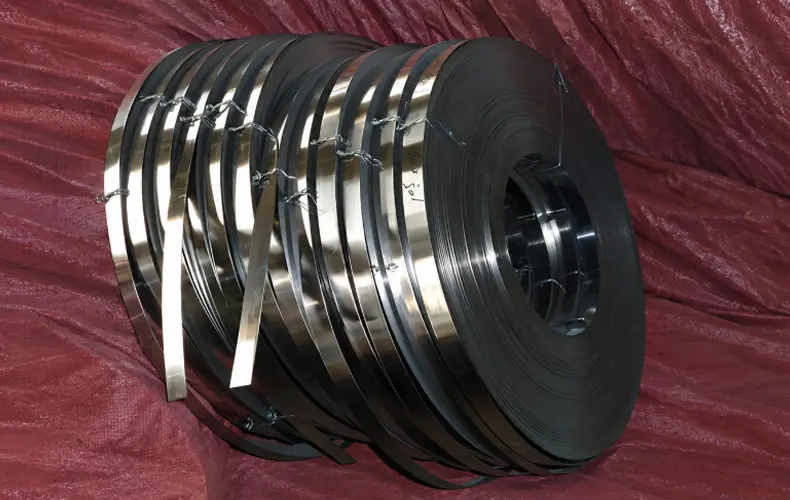
This order involves approximately 320 tons of stainless steel strips, with 304 cold-rolled stainless steel strips proposed as the product configuration, covering a range of thicknesses and widths. Depending on the actual order requirements, thicknesses may include 0.5 mm, 0.8 mm, 1.0 mm, and 1.2 mm, while widths may include 100 mm, 150 mm, 200 mm, 300 mm, and 500 mm. Narrower strips can be used to manufacture certain metal fasteners, connectors, and small stamped components. Wider strips can be further slit, stamped, or formed according to the customer’s processing requirements to produce industrial equipment components and building-related parts. Supplying a combination of specifications gives the customer greater flexibility in raw material selection. However, the exact grade, thickness, width, and quantity must be confirmed against the final order list agreed upon by both parties.
During order confirmation, communication between the customer’s purchasing team and the supplier involves more than checking prices and total tonnage. Both parties also need to verify the material grade, dimensional tolerances, surface condition, packaging method, and delivery requirements. For stainless steel strips used in continuous feeding, slitting, or stamping operations, dimensional consistency and edge condition can affect subsequent processing efficiency. Therefore, before production arrangements are finalized, all relevant specifications must be aligned with the customer’s technical requirements. If different widths are intended for different production applications, these distinctions should also be clearly stated in the order list to facilitate manufacturing, incoming inspection, and inventory management.
Once production is completed, quality inspection becomes an important step before export delivery. Depending on the order requirements, inspections may cover coil appearance, thickness, width, edge condition, surface scratches, and packaging integrity. For products subject to specific technical standards, the relevant material information, applicable standards, and inspection documents must also be checked. The customer’s quality personnel can verify the products against the documentation and acceptance requirements agreed upon by both parties, helping ensure that the delivered materials match the purchasing specifications. For long-term customers, clear and accurate product identification, together with complete supporting documentation, also helps reduce repeated confirmation work after the goods arrive.
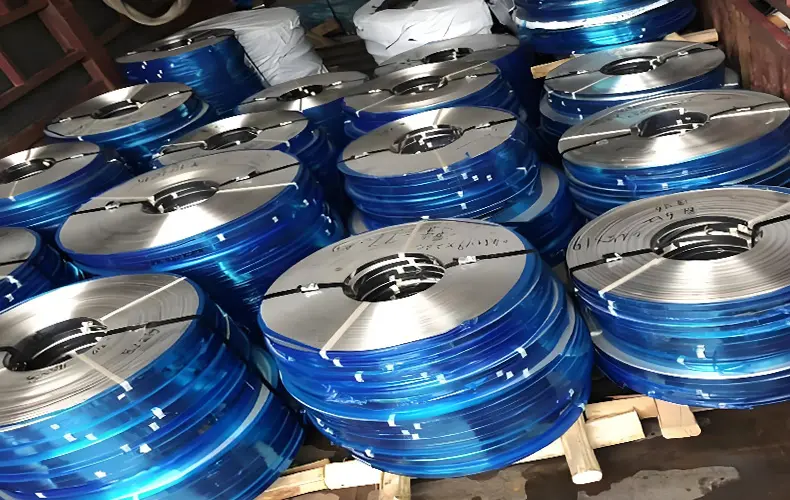
Export packaging must also take the characteristics of stainless steel strip coils into account. The coils are generally provided with appropriate protective packaging and secured according to their weight, dimensions, and transportation method. These measures help reduce the risk of impact, surface scratches, or coil movement during handling and transportation. Before shipment, the relevant personnel need to check the product specifications, package quantities, identification marks, and packing information to ensure that the physical goods correspond to the shipping documents. The actual number of containers, shipment batches, and vessel schedules will depend on the confirmed logistics arrangements.
The foundation of long-term cooperation lies in establishing a stable and clearly defined workflow between the supplier and the customer. For the customer, quarterly purchasing helps with inventory control and production planning. For GDD Steel, understanding the customer’s material requirements in advance makes it easier to coordinate product specifications, production schedules, and export preparations. Each order still needs to be reviewed according to the requirements of the current period, with quantities, specifications, and delivery dates reconfirmed rather than simply repeating the previous quarter’s purchasing arrangements.
GDD Steel continues to supply steel products and provide supporting export services to international markets, focusing on customers’ practical needs in material selection, specification matching, quality verification, and transportation arrangements. For stainless steel strip purchases, customers can provide the required grade, thickness, width, surface condition, order quantity, and relevant technical standards so that suitable specifications and supply solutions can be further confirmed. Whether the requirement involves a single specification or a quarterly order combining multiple widths and thicknesses, thorough communication in the early stages and clear order management remain essential to improving purchasing efficiency, maintaining delivery quality, and supporting long-term business cooperation.