
Printed Tinplate Sheets for Money Box Manufacturing
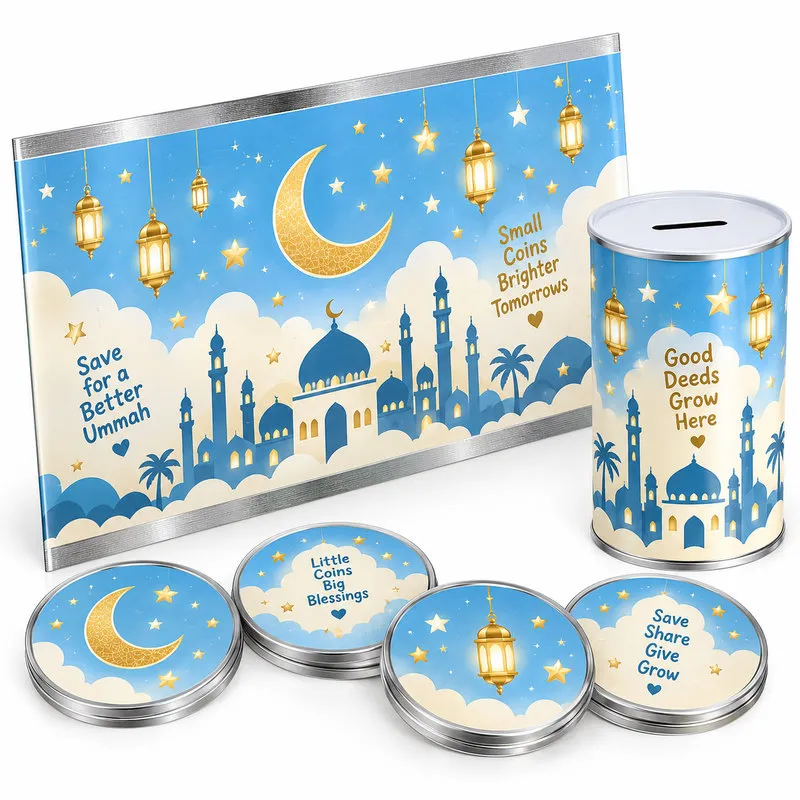
GDD Metal supplies printed tinplate sheets for manufacturers making metal money boxes, savings tins and decorative coin banks. Buyers receive flat decorated material for conversion on their own equipment. Matching lid and bottom requirements can be discussed with the sheet order.
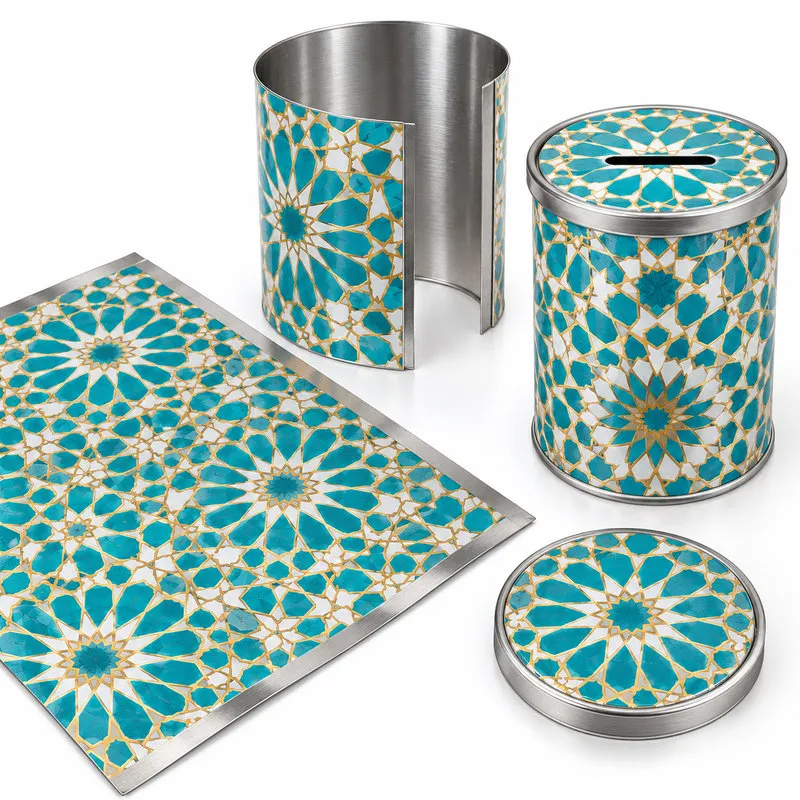
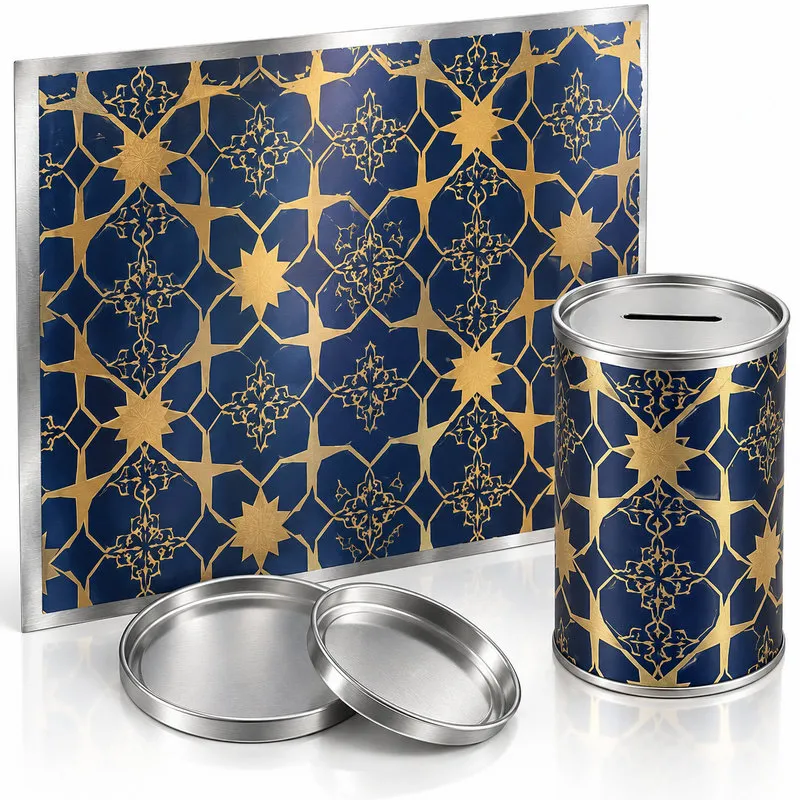
Develop a coordinated range with custom graphics, Islamic geometric patterns, Arabic text or seasonal gift artwork. Material selection and print layout are reviewed together so the design works after cutting, body forming and assembly.
Product Specifications
The thickness and dimension ranges below refer to the available base-sheet offering. They do not mean every combination is suitable for printing or your money box design. Final specifications follow the quotation, approved drawing and sample.
| Parameter | Specification |
|---|---|
| Product | Printed Tinplate for Money Boxes |
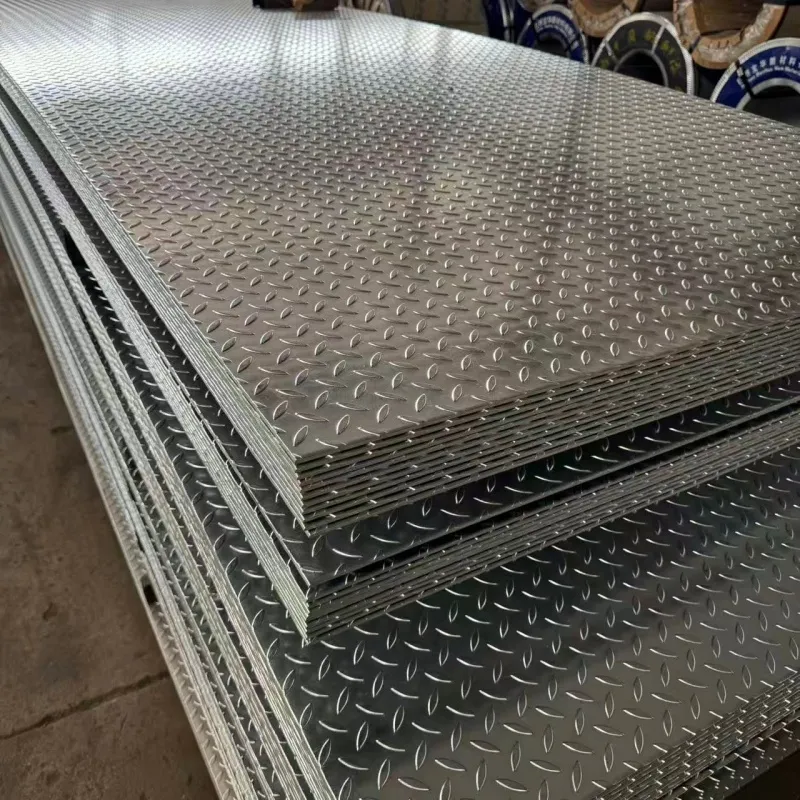
| Supply form | Flat printed sheets for downstream cutting and forming |
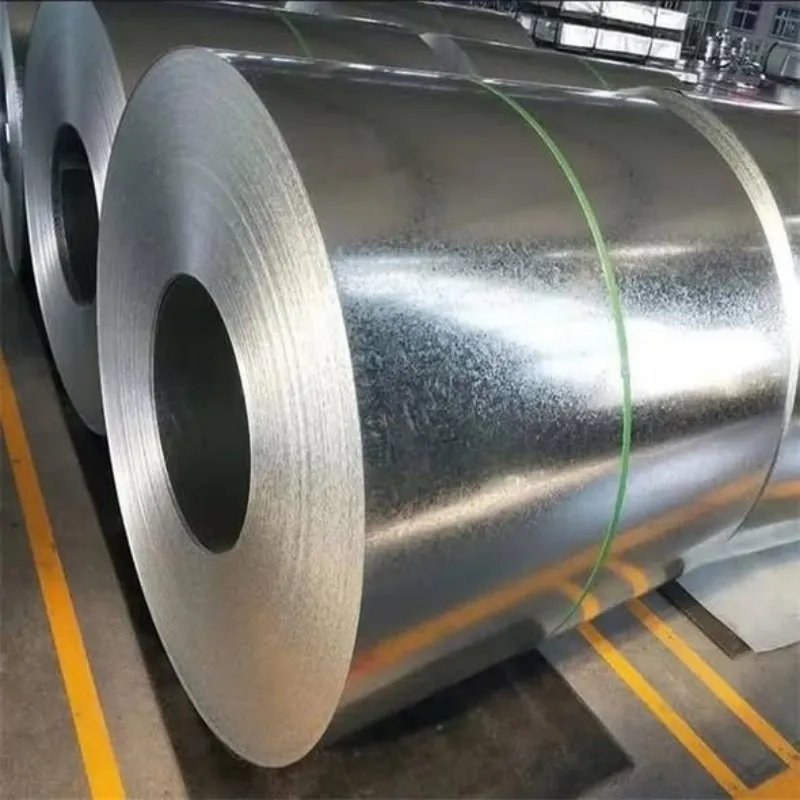
| Base material | Electrolytic tinplate (ETP / SPTE), tin-coated steel |
| Base steel thickness | 0.13–0.50 mm reference substrate range; suitability for the printed order must be confirmed |
| Sheet dimensions | 500–1200 mm width and length reference substrate range; final size subject to printing and cutting layout |
| Temper | Single-reduced or double-reduced material, selected for the customer's forming process |
| Tin coating | Examples: 2.8/2.8 or 5.6/5.6 g/m²; differential coating by agreement |
| Print specification | Custom artwork; color system, print faces and tolerances agreed before sampling |
| Protective finish | Varnish and reverse-side coating requirements agreed with the forming process |
| Layout details | Blank size, repeats, cutting marks, feed direction and seam clearances per approved drawing |
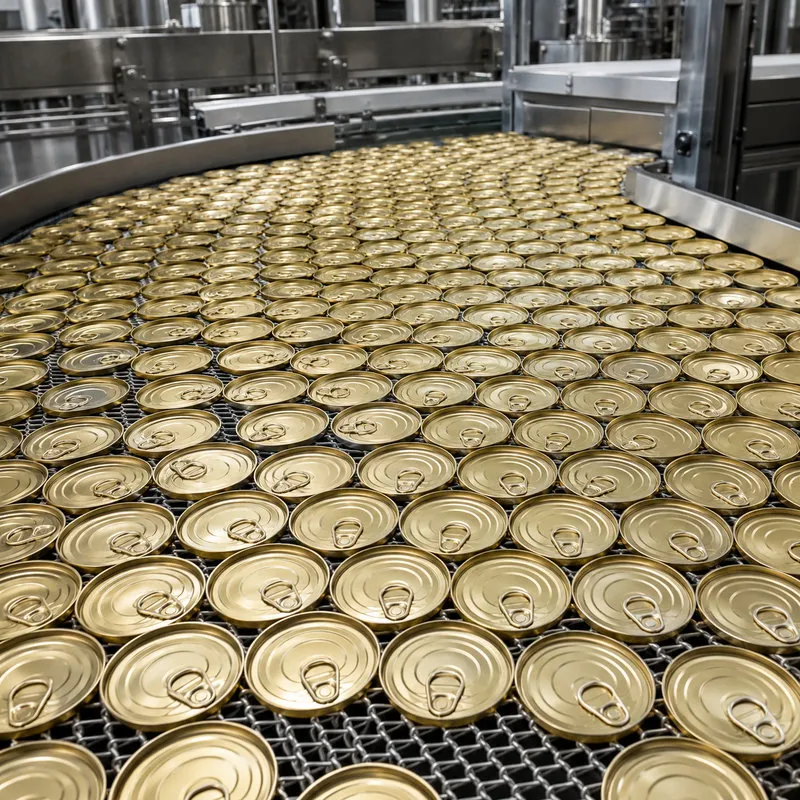
| Matching components | Tinplate lids and bottoms can be discussed against component drawings |
| Inspection | Agreed checks for dimensions, print registration, color, coating adhesion and forming performance |
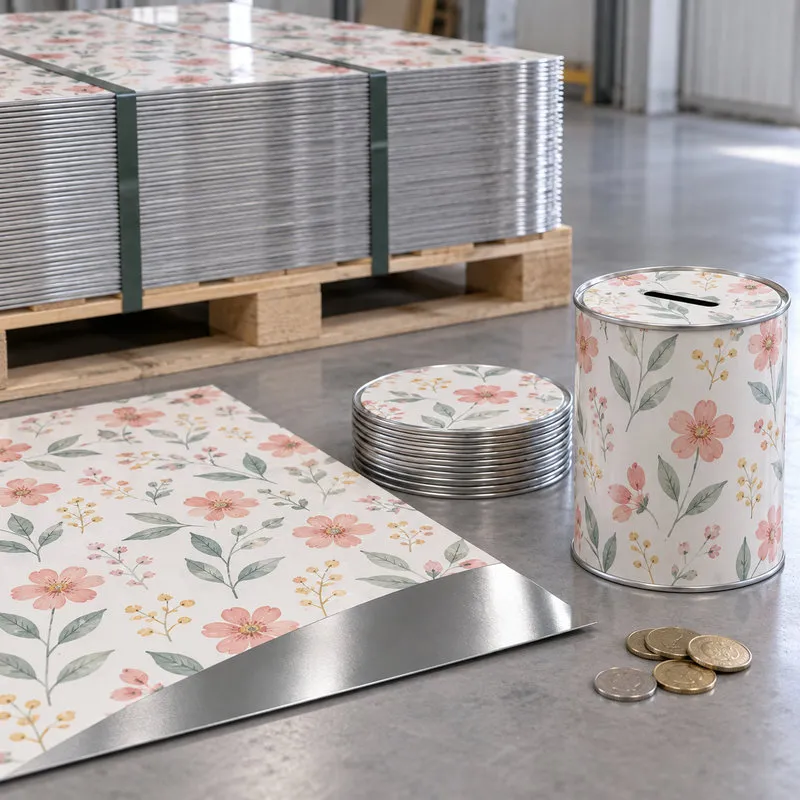
| Packing | Protected sheet stacks on pallets; moisture and abrasion protection agreed for shipment |
| Documentation | COO, traceable material MTC, export license where required, invoice, packing list and shipping documents |
| MOQ and lead time | Quoted by substrate, sheet layout, artwork versions, quantity and packing |
Why Make Money Boxes from Tinplate?
Tinplate combines a steel body with a printable surface. It supports decorative designs while providing the structure needed for a formed metal container. A reusable opening can turn the finished box into a lasting savings accessory.
Printing before forming gives manufacturers a flat surface for arranging repeated artwork. When the body format stays the same, a new design can refresh a collection without necessarily changing the body tooling. Printing setup and sample approval are still required.
Tinplate vs Plastic and PVC
Appearance: Tinplate suits metal gift collections, detailed printed graphics and selected exposed-metal effects. Plastic offers other advantages, including transparent bodies and complex molded shapes. PVC is one type of plastic.
Production flexibility: Manufacturers with suitable metal-forming equipment can use one validated body format across different printed designs. This may suit seasonal ranges better than developing a new molded shape for each design.
Handling and recovery: Tinplate provides a firm shell and its steel content can be separated magnetically in suitable recycling systems. Finished-product durability and recycling outcomes depend on construction, accessories and local collection.
Cost and limitations: Compare cost per accepted finished box, including printing, scrap, forming, packing and freight. Tinplate can dent or corrode if damaged and damp; plastic does not rust. Neither material is automatically cheaper, safer or stronger in every design.
Understanding Tinplate Options
Temper and Reduction Route
Single-reduced grades offer forming options; double-reduced grades provide higher strength and may allow thinner designs. Select by the actual bends, curls and seams. Changing temper requires a forming trial, not just a thickness comparison.
Tin Coating on Each Face
2.8/2.8 g/m² specifies nominal tin coating on each face; 5.6/2.8 g/m² specifies unequal faces. Coating choice, lacquer and storage conditions work together. Higher tin coating does not guarantee better printing or a stronger money box.
Substrate Finish and Printed Finish
Bright, stone and matte describe substrate finishes. Final gloss and color also depend on basecoat, ink and varnish. Approve a physical printed sample: a screen image cannot reliably represent the finished metal surface.
For unprinted substrate details, see our ETP tinplate sheet specifications .
Plan the Artwork Around Your Production Line
Cutting Layout and Material Yield
Provide the approved body-blank drawing, sheet-feed direction, edge margins and cutting sequence. Confirm how many complete blanks fit on each sheet after allowing for process margins. A larger sheet does not always deliver a lower cost per box.
Planning example: If an approved layout contains 12 body blanks, 10,000 sheets give 120,000 theoretical body blanks before rejects and setup losses. This is an arithmetic example, not a promised yield or a supply specification. Lids and bottoms must be planned separately.
Seams, Curls and Print Clearances
Identify whether your body uses a welded seam, a mechanical lock seam or another joint. For welding, define the required ink-free and coating-free areas with your equipment team. For other seams, confirm overlap, deformation and scuffing zones. Keep key artwork clear of hidden or heavily formed areas.
Color and Coating Approval
Agree the color reference, white-base coverage, protective finish and inspection conditions. Where lid and body artwork must match, approve them together. Test adhesion and appearance after forming, since a flat print sample alone cannot demonstrate conversion performance.
Money Box Opportunities in Middle Eastern Markets
Potential product directions include Ramadan savings tins, Eid gift-money boxes, Islamic gift-shop collections and branded community products. These are development opportunities to validate with local buyers, not verified market-growth or profit forecasts.
For a regional converter, buying printed sheets allows local control of forming and assembly. Flat sheets avoid shipping the empty internal volume of finished boxes, although total freight savings depend on weight limits, packing and the order mix.
Consider a small artwork range on one proven body size. Use locally reviewed Arabic wording, original or licensed graphics and a consistent lid design where appropriate. Have the buyer approve religious text and its placement before printing. Ask which denominations and opening styles the finished product must accommodate.
Illustrative Customer Applications
The following examples describe possible production briefs, not completed customer orders.
Local Can Maker: Several Designs on One Body Format
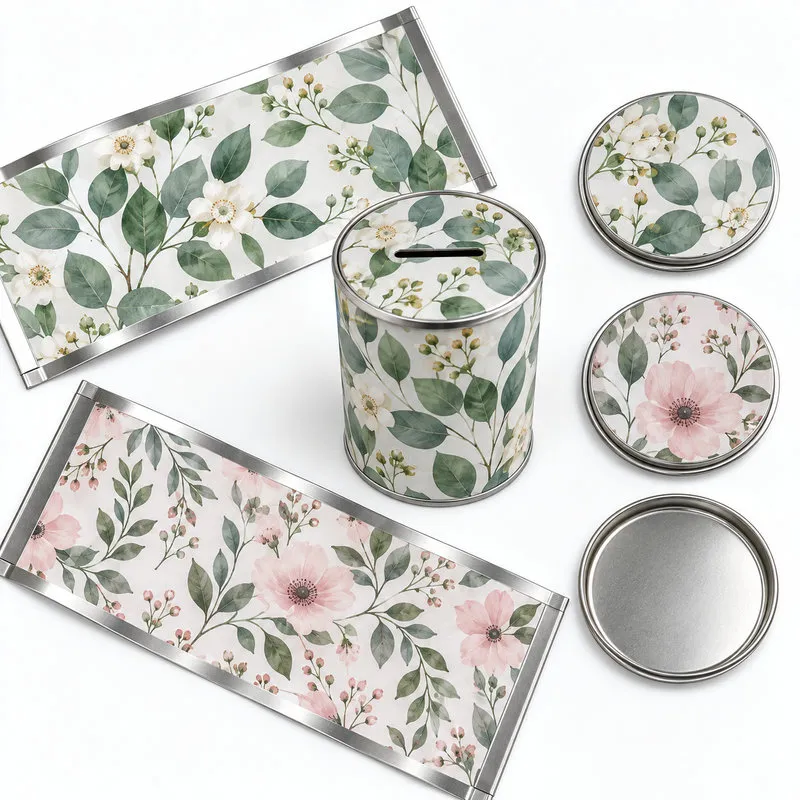
A converter could use one validated blank size for geometric, floral and savings-themed artwork. The priority would be consistent cut registration and seam placement across versions. Quote each design quantity and packing separation clearly to avoid mixing artwork during production.
Seasonal Gift Supplier: Coordinated Bodies and Lids
A supplier could develop a Ramadan range using printed body sheets and matching lids. Approval would cover assembled color, artwork orientation and lid fit. The delivery plan should allow time for local forming and packing before the retail launch.
Distributor: Printed Sheet Packs for Small Factories
A distributor could order identified packs by artwork and material specification. Pack labels and traceable batches would help downstream buyers repeat a successful design and investigate any conversion issue.
Sampling, Inspection and Export Documents
Start with a drawing and artwork review, then approve a printed metal sample. Where possible, convert trial sheets on the intended line before releasing the bulk order. Agree acceptance limits for dimensions, color, registration, scratches, adhesion and forming results.
We can provide a Certificate of Origin, material MTC, export license where required, and the agreed commercial, customs and shipping documents to support compliant export. The MTC relates to the base material; print inspection and any required finished-product testing are separate records.
Use protected sheet stacks and suitable pallet packing to limit abrasion, edge damage and moisture exposure. Confirm pack weight, lifting access and artwork identification before shipment.
Frequently Asked Questions
Are these finished money boxes?
No. This listing covers printed flat tinplate sheets for downstream manufacture. State separately whether you need body blanks, lids or bottoms.
Can we print Islamic designs and Arabic text?
Yes, subject to artwork and production review. Supply approved text and graphics, with clear orientation and placement on the assembled box.
Which thickness should we choose?
Send your current material specification or a finished-box drawing. Body dimensions, temper, seams and handling requirements determine the selection; the thinnest sheet is not necessarily the lowest-cost production option.
Can the same sheet specification be used for bodies and lids?
Not automatically. Bodies, lids and bottoms can have different forming and stiffness requirements. Confirm each component against its drawing.
Does the MTC certify the finished money box?
No. The converter must assess the assembled product for its intended use and destination, including any requirements for products marketed to children.
What determines MOQ and lead time?
Substrate availability, print setup, artwork count, coating requirements and quantity all affect the quotation. Include the required arrival date and allow time for sample approval.
Request a Printed Tinplate Quotation
Send your sheet or blank dimensions, thickness and temper if known, seam method, artwork files, quantity per design, destination port and target delivery date. Include lid and bottom drawings if you want a coordinated supply proposal.