
Steel sections are classified by cross-sectional shape, manufacturing method and intended function. Angle steel, channels, H beams and I beams commonly form structural members, while interlocking steel sheet piles are designed primarily for retaining walls and ground-support systems.
The right choice depends on loading direction, connections, stability, installation conditions and the required standard. This guide explains the main steel profile families and the information buyers should provide when sourcing structural steel sections from GDD Metal.
Angle steel has two legs forming an L-shaped cross section. Equal angles have matching leg widths; unequal angles use different widths. Both can be hot rolled, while lighter angle profiles may also be formed from strip or sheet.
Advantages: The accessible legs make cutting, drilling, bolting and welding convenient. Angles are useful for economical brackets, edge frames, truss members and bracing, with equal or unequal geometry selected around the connection layout.
Limitations: A single angle is an open section. Connecting through one leg can introduce eccentric loading, and torsion or buckling may govern performance. It should not be selected as a beam purely because its thickness looks substantial.
Typical applications: Transmission-tower members, roof-truss bracing, equipment brackets, shelving frames and fabrication supports. Outdoor projects may specify galvanizing or another protective finish. Explore our equal and unequal angle steel options.
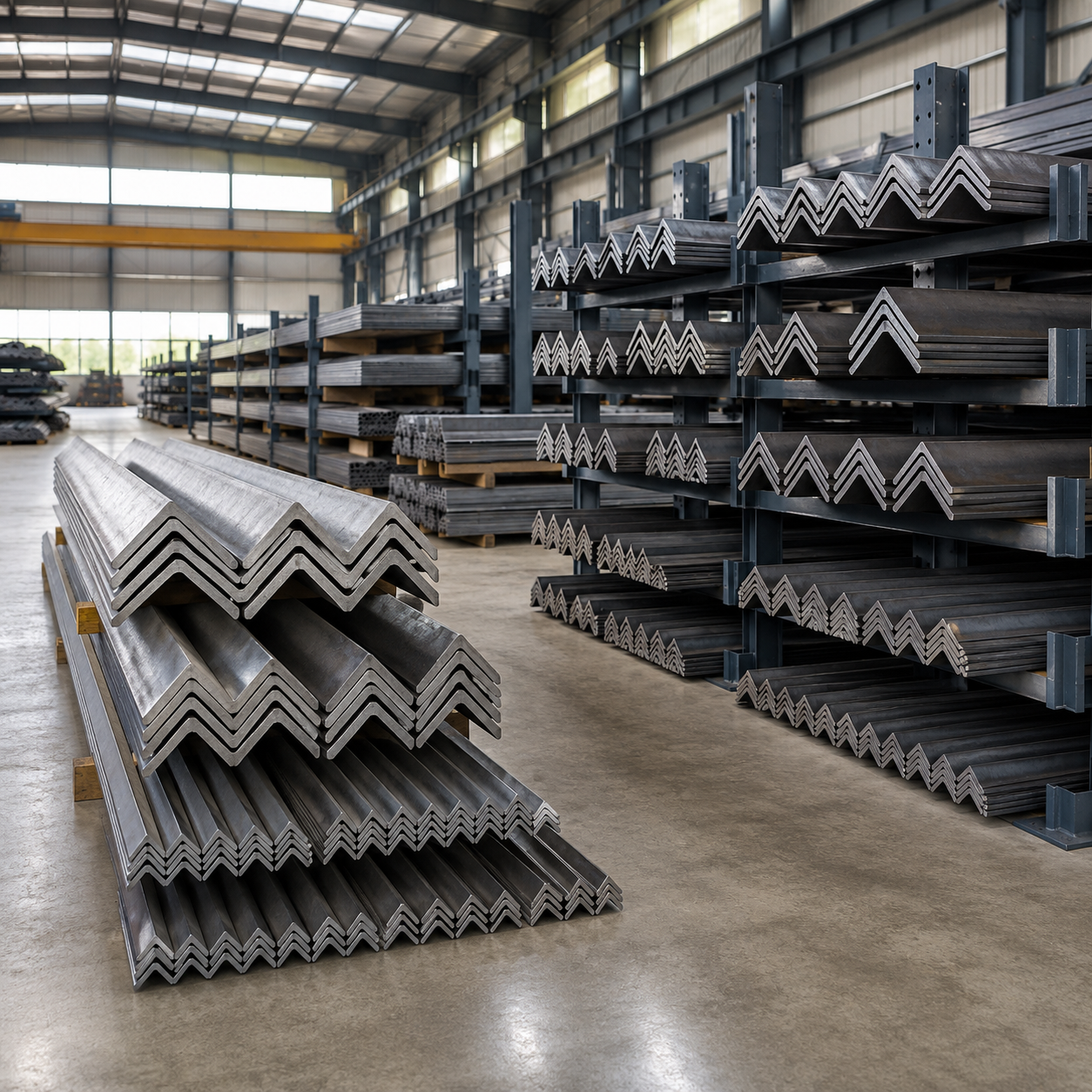
A channel has one web and two flanges, giving it an open U-shaped or C-shaped profile. European UPN channels have tapered inner flange surfaces, while UPE channels have parallel flanges. Their dimensions and section properties differ.
Advantages: The web offers a convenient surface for mounting and connections. Channels suit machinery bases, edge members, frames and supports, and can be paired where the structural design calls for a built-up member.
Limitations: The open, monosymmetric shape can twist when loads are applied away from its shear centre. Flange orientation, connection details and restraint matter. Two channels do not automatically act as one stronger section without appropriately designed connections.
Typical applications: Machinery frames, vehicle structures, platforms, warehouse systems and equipment supports. A thin cold-formed C purlin has different geometry and design requirements from a hot-rolled structural channel. See our carbon steel channels.
H beams are generally associated with comparatively wide, parallel flanges joined by a web. Related international families include HE sections, universal beams and columns, and American W shapes. These names identify section series, not a single interchangeable product.
Advantages: The flange-and-web arrangement provides efficient bending resistance and useful connection surfaces. Suitable wide-flange sections serve as beams or columns, with different series balancing depth, flange width and mass for the intended role.
Limitations: Open H sections still require checks for lateral stability, column buckling and local slenderness. A wide flange does not make every H beam stronger than every I beam. Larger sections also increase handling, transport and connection demands.
Typical applications: Building frames, factory columns, roof beams, equipment platforms and bridge members specified for the project. Hot-rolled and welded H sections are distinct production options. Review our H beam and wide-flange steel range.
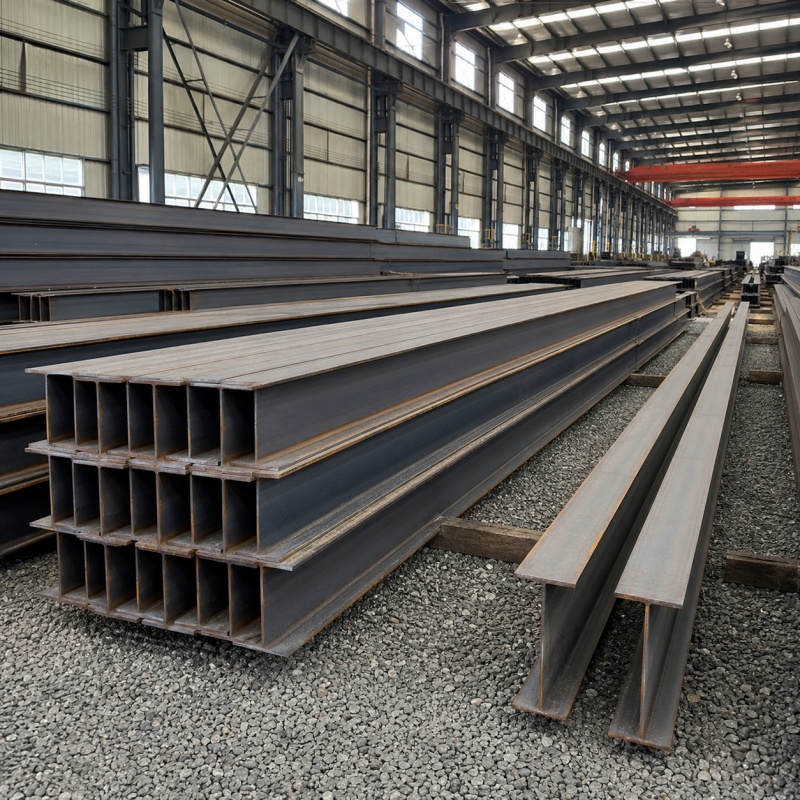
I beams also have two flanges connected by a web. European IPE sections have parallel flanges; IPN sections have tapered inner flange surfaces. The series therefore matters when comparing flange geometry and connection requirements.
Advantages: Standard I sections use material efficiently for bending about their major axis. Published section tables help designers and buyers specify depth, mass, section modulus and connection dimensions consistently.
Limitations: Weak-axis bending and torsion are less favorable than major-axis bending. Unrestrained members can be susceptible to lateral-torsional buckling. Tapered flanges may also require suitable connection detailing.
Typical applications: Floor beams, roof supports, industrial frames and machinery structures. Crane-support or other fatigue-sensitive applications require their own engineered specification. Our IPE and IPN steel sections should be ordered by complete designation rather than the phrase “I beam” alone.
Steel sheet piles are long sections with interlocks along their edges. Connected piles create a continuous retaining wall. U and Z profiles are common, and the choice involves wall section properties, connection behavior and installation requirements.
Advantages: Sheet piling supports staged excavation and continuous earth-retaining systems. Temporary piles may be recovered and reused where their condition and the project allow. U and Z ranges provide different wall geometries and structural-property options.
Limitations: Ground conditions, driving resistance, noise or vibration restrictions and corrosion exposure affect feasibility. Interlocks require careful handling and installation; a connected wall is not automatically watertight. Leakage-control measures must be specified where required.
Typical applications: Cofferdams, quay walls, basement excavations, riverbank protection and flood-control works. Compare section modulus per metre of wall, effective width, pile length and interlock compatibility when sourcing U and Z steel sheet piles.
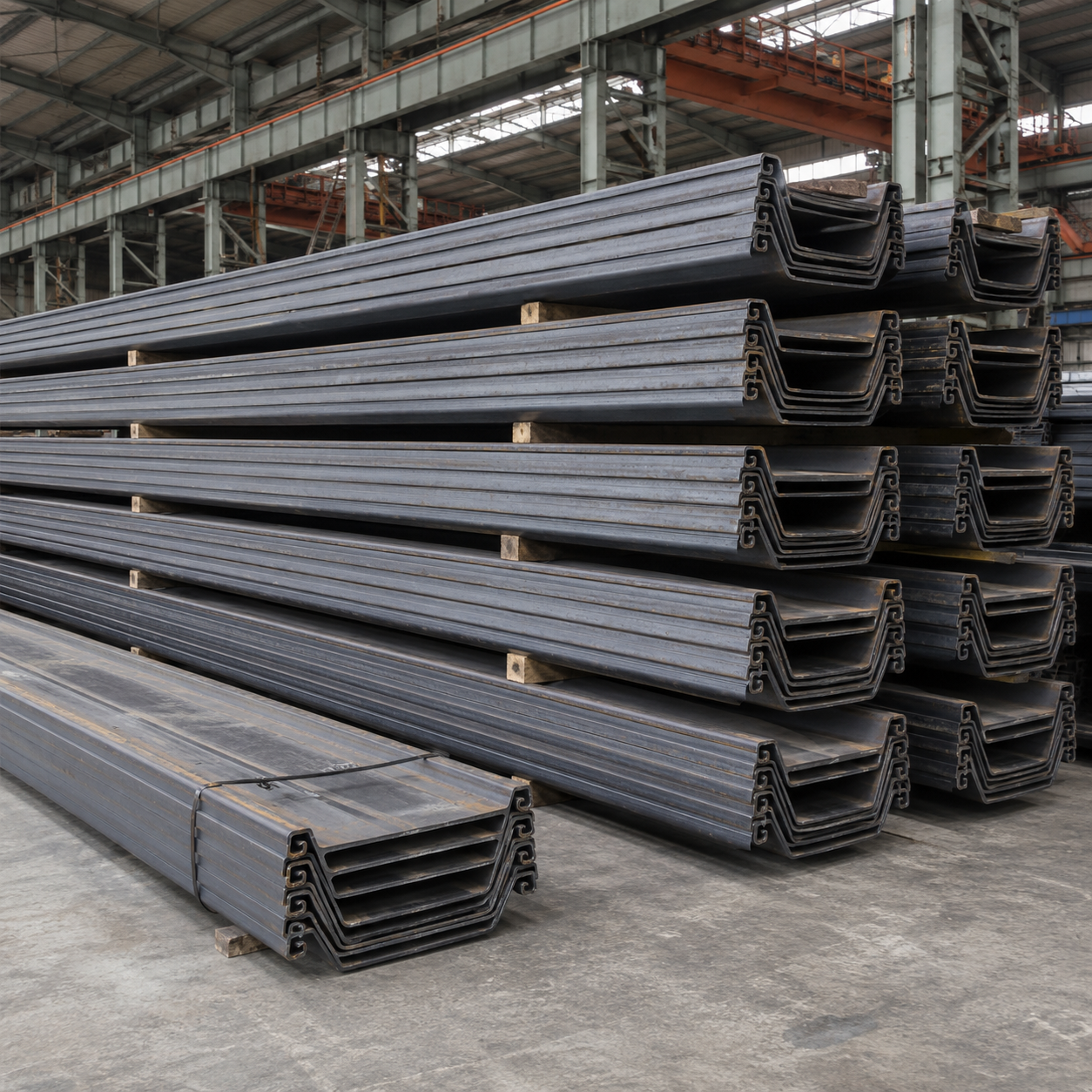
Heated steel is shaped through rolling stands into the required profile. This route produces established angle, channel, beam and sheet-pile series. Buyers should confirm dimensional tolerances, straightness, surface condition and the grade’s delivery condition. “Hot rolled” identifies a process, not the steel grade or guaranteed load capacity.
Steel strip or sheet is shaped by bending or roll forming without being hot rolled into the final section. The route suits thin-walled C/Z profiles and many welded hollow sections. Forming changes corner geometry and residual stresses, so design assumptions must follow the actual product and manufacturing route.
Plates or other elements are joined to create a required section, such as a welded H beam. This permits dimensions beyond some rolled catalogues, but adds welding, distortion-control and inspection requirements. Specify the base material, joint details, fabrication tolerances and required weld examination together.
A complete specification distinguishes material grade, dimensions and tolerances, fabrication, surface protection and inspection documents. For example, a material standard does not by itself establish the exact flange geometry, and a galvanizing standard does not establish structural strength. State the edition required by the purchase order.
GB/T 700 covers carbon structural steels, while GB/T 1591 covers high-strength low-alloy structural steels. GB/T 706 addresses hot-rolled section steel, and GB/T 11263 addresses hot-rolled H and cut T sections. Grades such as Q235B and Q355B must be ordered with their applicable product requirements.
Standard status checked in October 2026: GB/T 11263-2024 is in force. GB/T 706-2016 remains current at this review date, while the published GB/T 706-2026 is scheduled to take effect on December 1, 2026. Confirm the applicable edition for the order and delivery date.
EN 10025 parts define material delivery requirements for relevant structural steel grades. EN 10365 provides nominal dimensions and masses for specified I, H and channel series. Relevant tolerance standards include EN 10034 for parallel-flange I/H sections, EN 10024 for tapered-flange I sections and EN 10279 for channels; EN 10056-1/-2 covers angle dimensions and tolerances.
Hot-rolled sheet piles use the EN 10248 series; cold-formed sheet piles use EN 10249. Structural hollow sections follow the appropriate EN 10210 or EN 10219 product route. EN 1090-2 addresses execution of steel structures, including fabrication requirements; it serves a different purpose from a raw-material grade specification.
ASTM A6/A6M provides general requirements for relevant rolled structural products. Material specifications include ASTM A36/A36M, A572/A572M and A992/A992M, according to the product and project. ASTM A328/A328M addresses steel sheet piling. A required ASTM grade cannot be demonstrated simply by offering another grade with a similar nominal yield strength.
For Japanese specifications, JIS G 3101 covers steels for general structures, JIS G 3106 covers steels for welded structures, and JIS G 3192:2024 addresses hot-rolled section dimensions, shape, mass and permissible variations. Identify both the material grade and the section series.
Common finishes include the mill surface, shot blasting and painting, or hot-dip galvanizing. ISO 1461 and ASTM A123/A123M are commonly specified for relevant galvanized fabricated articles. Agree the applicable coating standard, preparation, inspection and appearance requirements separately from the steel grade.
The following ranges summarize selected published supply options. Final availability depends on the section model, grade, production route and current stock. The listed dimensional limits apply separately and do not describe every possible combination.
| Parameter | Supply Options / Order Requirements |
|---|---|
| Main products | Equal/unequal angles, channels, H beams, I beams and interlocking steel sheet piles |
| Angle steel | Published equal-angle leg sizes: 20 × 20 to 200 × 200 mm; thickness: 3–24 mm; unequal angles by selected series |
| Channel steel | Published web height: 50–400 mm; flange width: 30–110 mm; final dimensions follow the chosen section |
| H beam steel | Published height: 100–1,000 mm; flange width: 50–450 mm; rolled or welded options according to specification |
| I beam designation | IPE, IPN or the agreed section series, with exact dimensions and mass per metre |
| Sheet pile specification | U/Z profile, effective wall width, thickness, length, section modulus per metre of wall and interlock system |
| Material options | Examples: Q235B, Q355B, SS400, S235JR, S355JR, ASTM A36 or A572 Grade 50; sheet-pile grades such as S355GP by specification |
| Length options | 6 m, 9 m, 12 m or agreed cut lengths; confirm availability and shipping requirements |
| Surface and processing | Mill finish, shot blasting, painting or galvanizing; cutting, drilling, punching, beveling and fabrication by agreement |
| Inspection and documents | MTC, dimensional and surface inspection, agreed additional testing, export license and shipping documentation |
Henan GDD Metal Materials Co., Ltd. maintains stock options across common steel section families, including angle steel, channel steel, H beams, I beams and steel sheet piles. We can combine stock supply with project sourcing and agreed processing. Available sizes, grades, quantities and delivery dates are confirmed at quotation.
We hold an export license and can supply Mill Test Certificates (MTCs), a Certificate of Origin and agreed commercial and shipping documents. The MTC supports heat or batch traceability and review of the supplied material’s reported chemistry and mechanical properties. Additional inspection requirements should be included in the order specification.
For a coordinated quotation, contact GDD Metal with your Bill of Materials, section drawings, required standards, grades, lengths, quantities, surface finish and destination. Clear specifications help match inventory to the project and reduce errors during fabrication and installation.