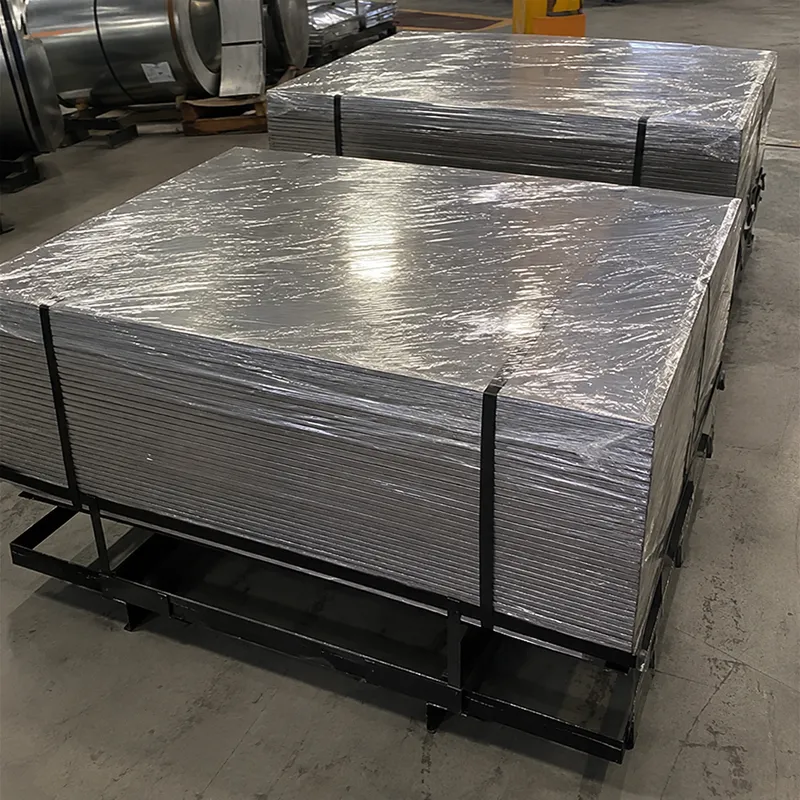
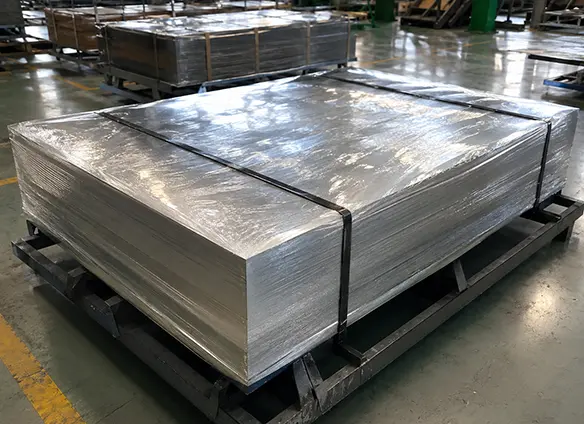
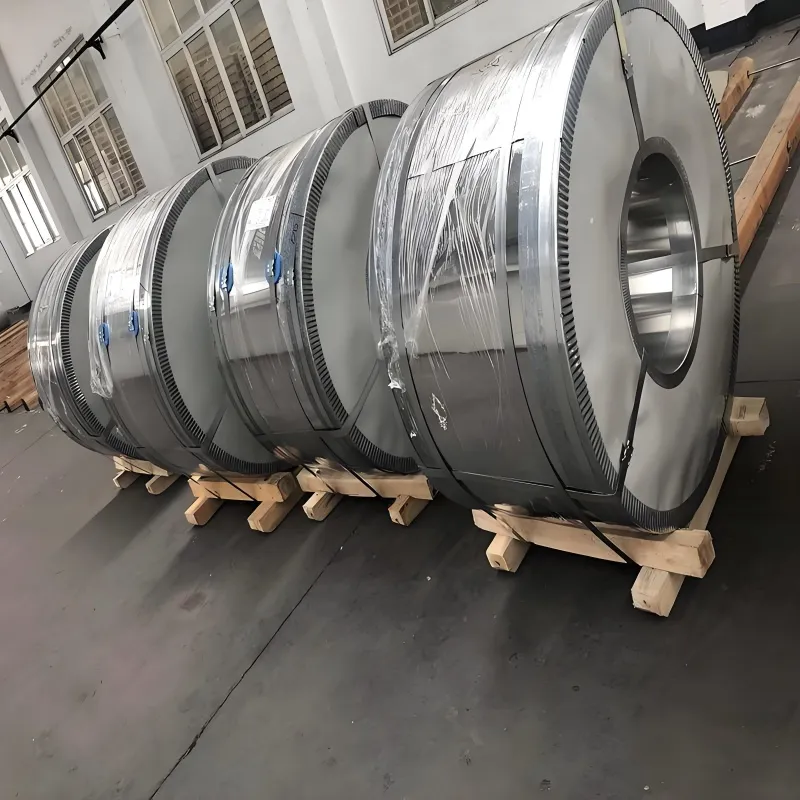
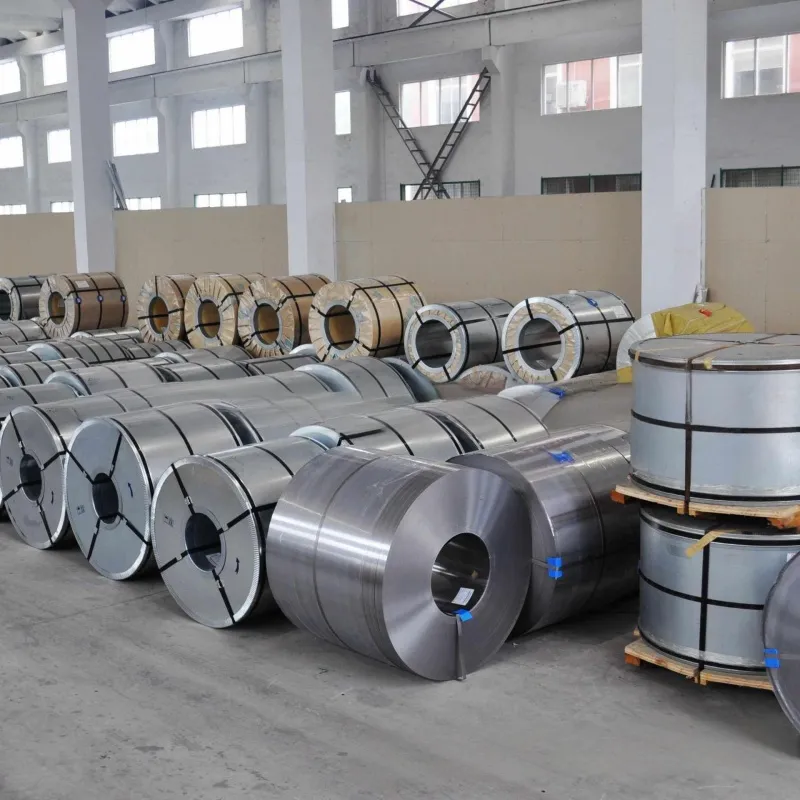
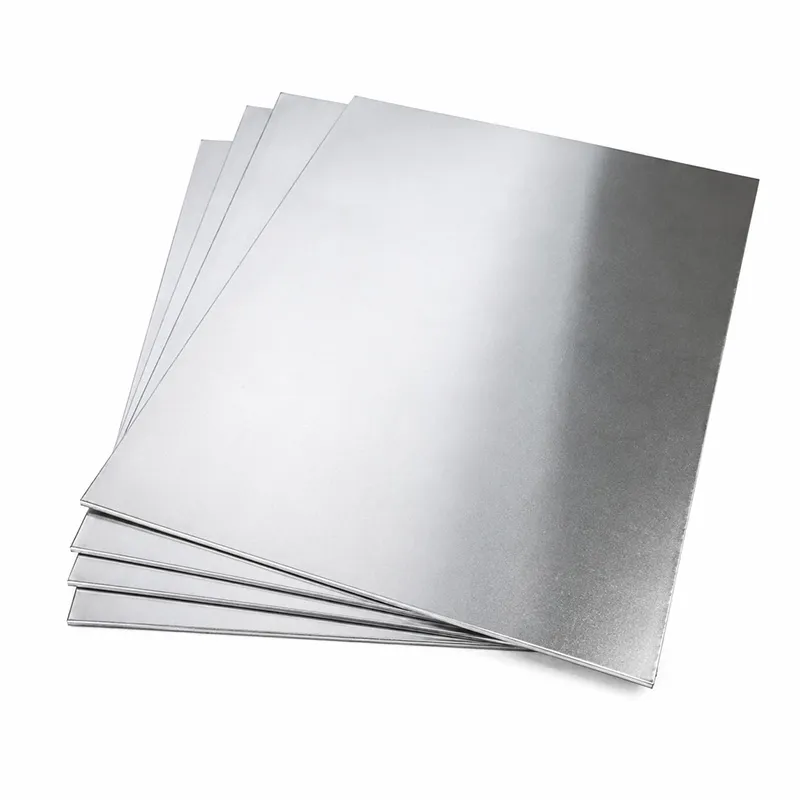
GDD Metal supplies high-quality ETP/SPTE tinplate sheets designed for food cans, beverage cans, easy open ends, lids, printed tin boxes and other metal packaging applications. With excellent corrosion resistance, formability, weldability and printing performance, our tinplate sheets can be customized according to different can-making and packaging requirements.
GDD Metal supplies high-quality tinplate sheets, including ETP (Electrolytic Tinplate) and SPTE tinplate steel, for food packaging, beverage cans, easy open ends, metal containers, printed tin boxes and other industrial applications.
Tinplate is produced by coating a thin layer of tin onto a low-carbon cold rolled steel substrate. It combines the mechanical strength and formability of steel with the corrosion resistance, solderability, printability and clean surface characteristics of tin.
We can supply tinplate sheets in different thicknesses, temper grades, tin coating weights, surface finishes and sheet dimensions. Equal coating and differential coating are available according to the customer's production process and end-use requirements.
Our tinplate sheets can be customized according to thickness, width, length, temper, tin coating and surface finish. The following table shows our common supply range.
| Item | Specification |
|---|---|
| Product | ETP / SPTE Tinplate Sheet |
| Base Material | Low Carbon Cold Rolled Steel |
| Thickness | 0.13 – 0.50 mm |
| Width | 500 – 1200 mm or customized |
| Length | Customized sheet length |
| Temper | T1 / T2 / T2.5 / T3 / T4 / T5 / DR8 / DR8.5 / DR9 |
| Annealing | BA / CA |
| Reduction | Single Reduced (SR) / Double Reduced (DR) |
| Tin Coating | Equal or Differential Coating |
| Common Tin Coating | 2.8/2.8, 5.6/5.6, 8.4/8.4 g/m² and customized combinations |
| Surface Finish | Bright / Stone / Fine Stone / Silver / Matte |
| Processing | Cutting / Slitting / Printing / Lacquering |
| Application | Food cans, beverage cans, EOE lids, can bodies, tin boxes and metal packaging |
Temper determines the mechanical properties, hardness and forming performance of tinplate. Softer grades are generally selected for applications requiring deeper forming, while harder or double-reduced grades are commonly used where higher rigidity and material-saving performance are required.
| Temper | Reduction | Relative Hardness | Typical Applications |
|---|---|---|---|
| T1 | SR | Soft | Deep drawing and highly formed components |
| T2 | SR | Soft to Medium | General can making and formed containers |
| T3 | SR | Medium | Food cans, can bodies and general packaging |
| T4 | SR | Hard | Ends, lids and higher-strength packaging parts |
| T5 | SR | Extra Hard | High-rigidity components and selected ends |
| DR8 / DR8.5 | DR | High Strength | Can bodies, ends and lightweight packaging |
| DR9 | DR | Very High Strength | High-strength thin-gauge packaging components |
Note: Final temper selection should be confirmed according to the customer's forming process, can design and applicable material standard.
Tin coating is one of the most important parameters of electrolytic tinplate. The coating helps protect the steel substrate and provides a suitable surface for welding, lacquering and printing.
| Coating Type | Examples | Description |
|---|---|---|
| Equal Coating | 2.8/2.8, 5.6/5.6, 8.4/8.4 g/m² | The same nominal tin coating is applied to both sides. |
| Differential Coating | 5.6/2.8, 8.4/2.8, 8.4/5.6 g/m² | Different tin coating weights are applied to each side according to application requirements. |
Differential tin coating can help optimize coating usage when the internal and external surfaces of a container have different corrosion-resistance or processing requirements. Final coating selection depends on the packed product, lacquer system and customer's production process.
Different surface finishes can be selected according to printing, appearance and packaging requirements.
Tinplate steel sheets are widely used in the packaging industry because of their combination of strength, corrosion resistance, formability, weldability and excellent printing performance.
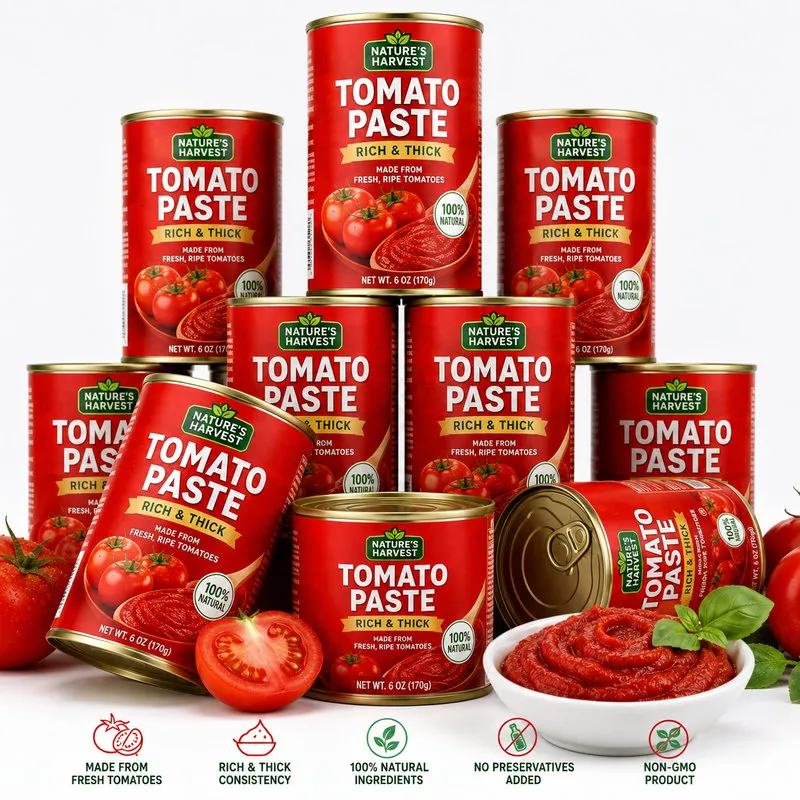
Tinplate is widely used for canned vegetables, fruits, meat, fish, tomato paste and other processed foods. Different tin coating weights and lacquer systems can be selected according to the packed product.
The excellent formability and printable surface of tinplate make it suitable for beverage containers, milk powder cans and other sealed metal packaging.
Higher temper and double-reduced tinplate grades can be selected for easy open ends, bottom ends and lids requiring good rigidity and stamping performance.
Tinplate provides an excellent substrate for lithographic printing and decorative coatings, making it suitable for biscuit tins, tea boxes, gift boxes, candy boxes and promotional metal packaging.
Tinplate can also be used for aerosol cans, chemical containers, paint cans and other industrial packaging according to the required material specification and protective coating system.
| Property | Description |
|---|---|
| Base Material | Low-carbon cold rolled steel |
| Metallic Coating | Electrolytically deposited tin |
| Steel Density | Approximately 7.85 g/cm³ |
| Magnetic Property | Magnetic due to the steel substrate |
| Formability | Suitable for stamping, forming and can-making operations |
| Printability | Suitable for lithographic printing and lacquering |
| Recyclability | Steel-based material suitable for established metal recycling streams |
Although tinplate appears to be a simple tin-coated steel sheet, its surface consists of several functional layers. Each layer contributes to corrosion resistance, surface stability and subsequent processing performance.
| Layer | Main Function |
|---|---|
| Protective Oil Film | Helps protect the surface and improves handling during processing. |
| Passivation Layer | Improves surface stability and resistance to oxidation. |
| Tin Oxide / Metallic Tin | Provides the characteristic tinplate surface and corrosion protection. |
| Fe-Sn Alloy Layer | Provides bonding between the tin layer and steel substrate. |
| Steel Substrate | Provides mechanical strength, rigidity and forming capability. |
The production of high-quality electrolytic tinplate requires precise control of the steel substrate, surface preparation, tin deposition and final surface treatment.
Low-carbon cold rolled steel is prepared according to the required thickness, mechanical properties and surface quality.
Oil, rolling residues and contaminants are removed from the steel surface to ensure stable and uniform tin plating.
The steel is annealed to obtain the required mechanical properties and formability. Batch annealing or continuous annealing can be selected depending on the required grade and production process.
Temper rolling controls the final surface condition, shape, mechanical properties and hardness of the steel substrate.
A controlled layer of tin is electrolytically deposited onto the prepared steel strip. Tin coating weight can be adjusted according to customer requirements, including equal and differential coatings.
After tin plating, the surface receives appropriate post-treatment and protective oiling to improve surface stability and protect the material during storage and transportation.
The finished tinplate is inspected for thickness, dimensions, surface quality, tin coating and other agreed specifications before being cut into sheets or prepared for further processing.
Quality control is essential for tinplate used in metal packaging. Inspection can be performed according to the agreed product standard, purchase specification and application.
In addition to standard tinplate sheets, GDD Metal can provide value-added processing services to help customers prepare materials for can making and metal packaging production.
Tinplate sheets require careful protection against moisture, impact and surface damage during international transportation. Export packages can be prepared according to sheet size, quantity and customer requirements.
Typical packaging may include moisture-resistant paper, protective steel wrapping, edge protection, steel straps, wooden pallets or skids and identification labels. Container loading plans can also be arranged according to shipment quantity.
To receive an accurate quotation, please provide as much of the following information as possible:
| Required Information | Example |
|---|---|
| Thickness | 0.20 mm |
| Sheet Size | 800 × 1000 mm |
| Temper | T4 / DR8 |
| Tin Coating | 2.8/2.8 g/m² |
| Surface | Bright / Stone |
| Application | Food Can / EOE / Tin Box |
| Quantity | 25 MT |
| Destination | Destination Port / Country |
Tinplate sheet is a low-carbon steel sheet coated with a thin layer of tin. It combines the mechanical properties of steel with the surface protection and processing characteristics of tin and is widely used in metal packaging.
ETP means Electrolytic Tinplate, while SPTE is a commonly used steel designation for electrolytic tin-coated steel. Both terms are frequently used in the international tinplate market, although exact product specifications should always be confirmed according to the applicable standard.
Common tinplate sheet thicknesses range from approximately 0.13 mm to 0.50 mm. The appropriate thickness depends on the container design, forming process and required mechanical strength.
These values indicate the nominal tin coating weight on the two surfaces of the tinplate. For example, 2.8/2.8 g/m² represents equal nominal coating on both sides. Differential coating can also be supplied when different coating weights are required on each side.
SR means single-reduced tinplate, while DR means double-reduced tinplate. Double-reduced material generally provides higher strength and rigidity at a thinner gauge, making it useful for selected can bodies, ends and lightweight packaging applications.
Yes. Tinplate has excellent lithographic printing characteristics. Printed tinplate can be used for food cans, decorative cans, gift boxes, tea tins, biscuit tins and other metal packaging.
Yes. Lacquering can be arranged according to the product application, packed contents, customer specification and required coating system.
Yes. Tinplate remains magnetic because the primary substrate is steel. The thin tin coating does not remove the magnetic characteristics of the steel base.
Yes. Tinplate is a steel-based packaging material and can enter established metal recycling streams after use.
Please send us your required thickness, width and length, temper grade, tin coating, surface finish, application, quantity and destination port. If you are unsure about the correct specification, you can also provide your end product or can-making application and our team can help evaluate a suitable material specification.
Send us your required thickness, size, temper, tin coating, quantity and application.
GDD Metal will provide a suitable tinplate specification and competitive quotation for your project.