
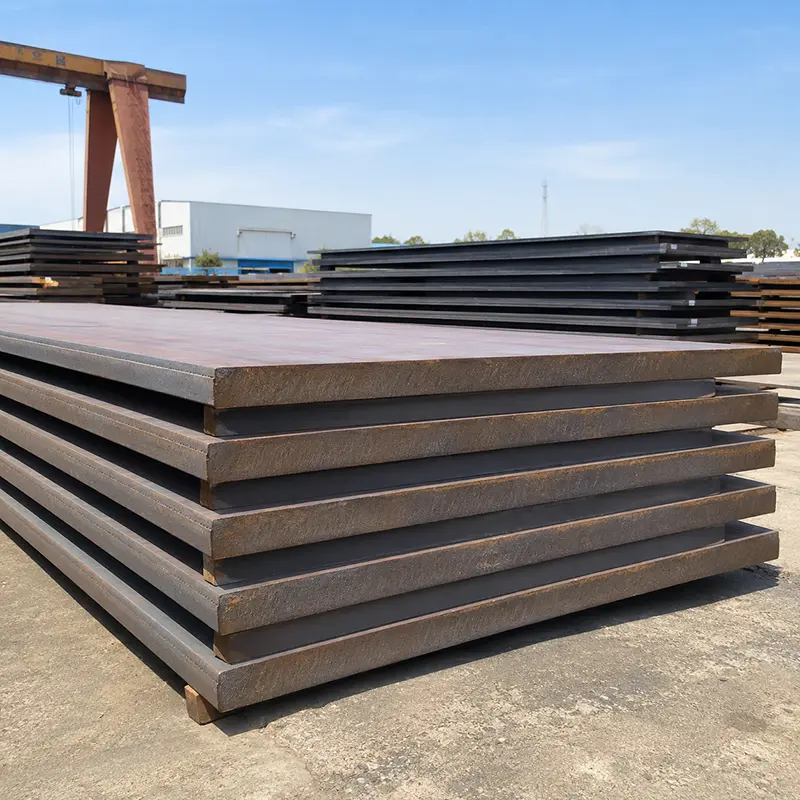
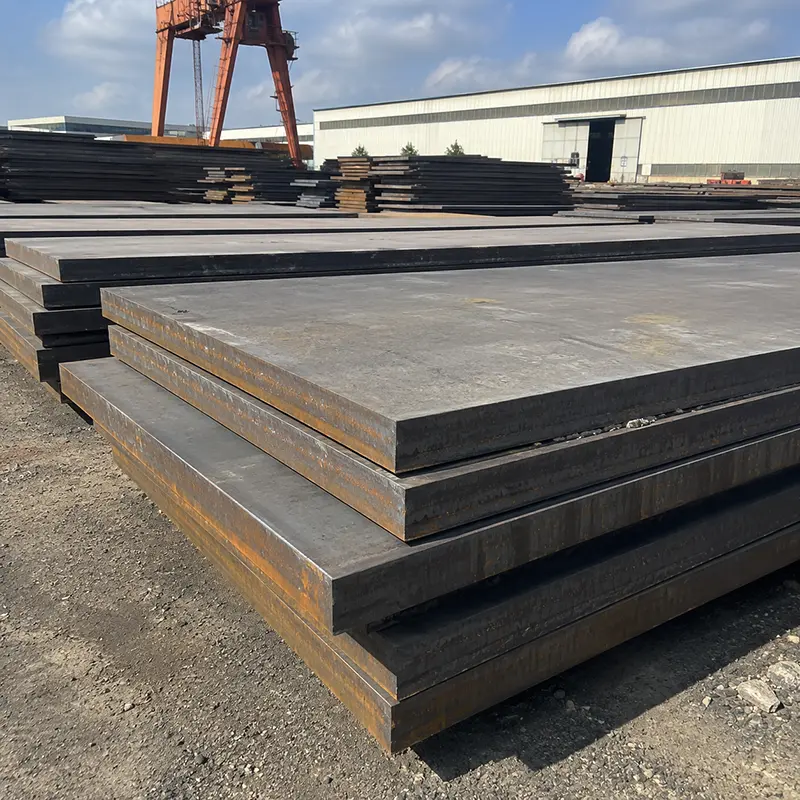
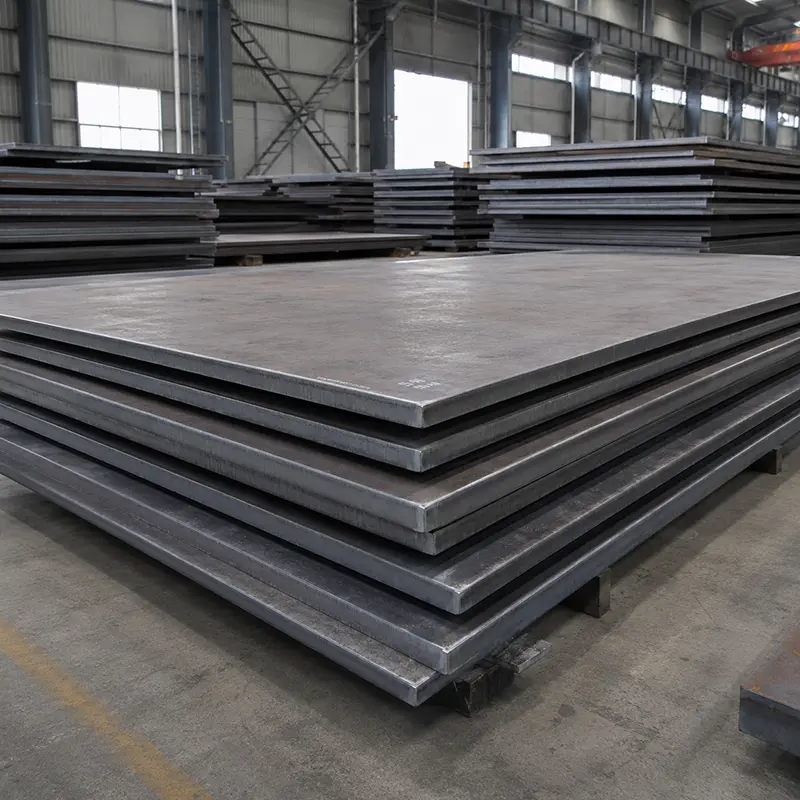
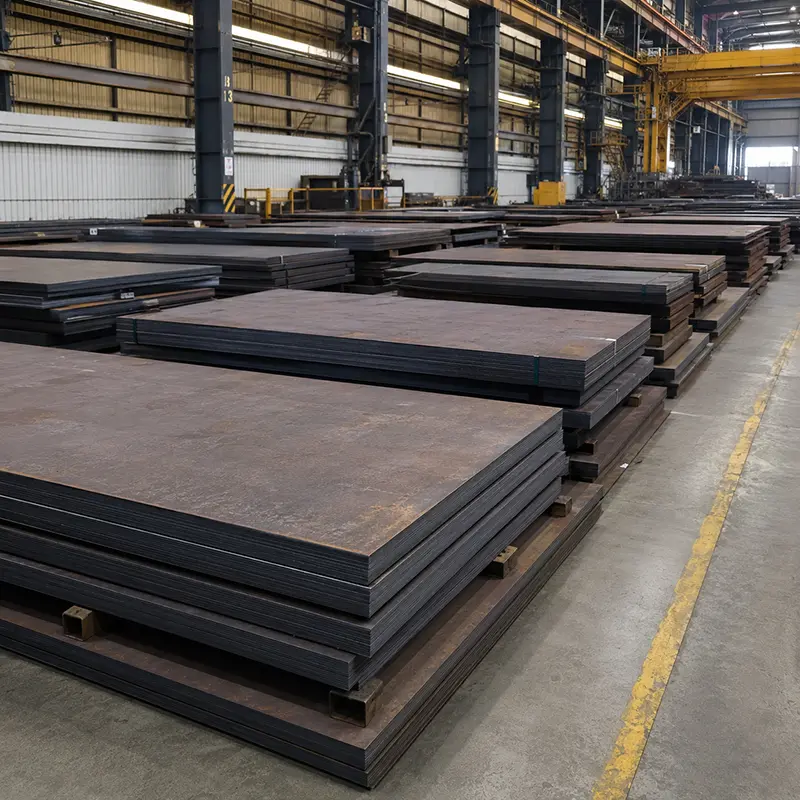
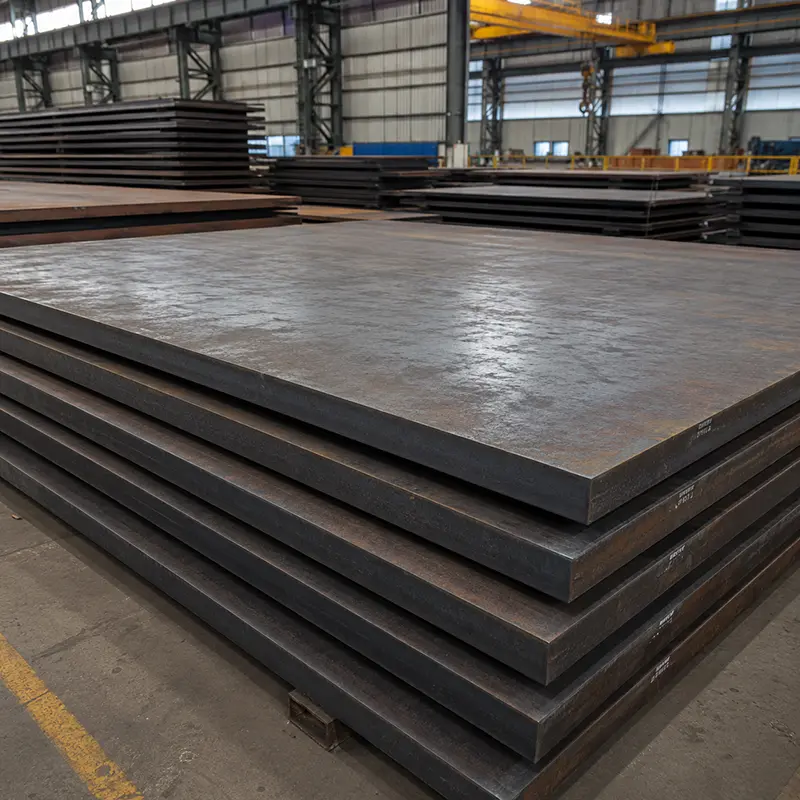
Wear Resistant Steel Plate – High-hardness plate for severe abrasion and impact conditions.
NM400 & AR500 Available – Multiple wear grades for mining and heavy industrial equipment.
Custom Drawing Processing – Cutting, drilling, beveling and component fabrication supported.
Longer Equipment Service Life – Helps reduce replacement frequency and maintenance downtime.
Export Ready Supply – MTC, hardness testing, inspection support, FOB, CIF and CFR available.
Wear resistant steel plate is a high-hardness steel material designed for machinery, liners and structural components exposed to continuous friction, impact and abrasive materials. It provides better resistance to material loss than conventional structural steel plate and is widely used in mining, quarrying, cement production, construction machinery, material handling and recycling industries.
During operation, equipment parts may come into direct contact with stone, ore, coal, sand, gravel, cement clinker, scrap metal and other abrasive substances. These working conditions can quickly damage ordinary steel components. Using a suitable wear resistant steel plate can help extend component life, reduce maintenance intervals and improve equipment operating efficiency.
Henan GDD supplies NM-series and AR-series wear resistant steel plates in different hardness levels, thicknesses and dimensions. Plates can also be processed according to customer drawings, including profile cutting, hole drilling, beveling, bending and welding preparation.
| Item | Specification |
|---|---|
| Product Name | Wear Resistant Steel Plate / Abrasion Resistant Steel Plate |
| Common Grades | NM360, NM400, NM450, NM500, NM550, NM600, AR400, AR450, AR500 or Customized |
| Standard | GB/T 24186, ASTM, EN, JIS or Customer Specification |
| Production Condition | Quenched and Tempered / Controlled Rolling and Heat Treatment |
| Thickness | 4 mm – 120 mm or Customized |
| Width | 1500 mm – 4000 mm or Customized |
| Length | 3000 mm – 12000 mm or Customized |
| Nominal Hardness | Approximately 360 – 600 HBW Depending on Grade |
| Surface Condition | Black, Shot Blasted, Shop Primer Coated or Customized |
| Edge Condition | Mill Edge, Flame-cut Edge, Plasma-cut Edge or Machined Edge |
| Processing Service | Cutting, Drilling, Beveling, Bending, Welding Preparation and Drawing-based Fabrication |
| Inspection | MTC, Hardness Test, Dimension Inspection, Surface Inspection, UT and Third-party Inspection |
| Applications | Mining Machinery, Crushers, Chutes, Hoppers, Buckets, Dump Trucks, Cement Equipment and Conveyors |
| Packing | Steel Strip Bundles, Reinforced Pallet or Standard Export Seaworthy Packing |
| Trade Terms | FOB, CFR, CIF, EXW |
Available dimensions, hardness tolerance and mechanical properties may vary according to grade, thickness and production standard. Final specifications should be confirmed through the purchase order and material certificate.
Wear resistant steel plate is a specialized alloy steel plate with high hardness and controlled toughness. It is normally produced through alloy design, controlled rolling and heat treatment to improve resistance against sliding abrasion, impact abrasion and surface material loss.
Unlike ordinary structural steel, wear-resistant plate is selected mainly according to hardness, abrasion condition, impact load and expected component life. It is commonly fabricated into replaceable liners and equipment parts that directly contact abrasive materials.
The plate can be cut into different shapes and installed in crushers, excavators, truck bodies, transfer chutes, screens, hoppers and material handling systems.
NM400 is a widely used wear-resistant grade that provides a practical balance of hardness, toughness and fabrication performance. It is commonly used for excavator buckets, loader components, dump truck bodies, liners and construction machinery parts.
NM450 provides higher nominal hardness than NM400 and is suitable for equipment exposed to stronger abrasion. Typical applications include mining machinery, chutes, hoppers, crusher components and heavy-duty material handling equipment.
NM500 is designed for severe abrasive environments requiring longer service life. It is widely used for crusher liners, screening equipment, mining machinery, transfer systems, bucket components and industrial wear parts.
AR400 steel plate is commonly used in international markets for medium to heavy abrasion applications. It is suitable for truck bodies, construction equipment, buckets, agricultural machinery and general wear components.
AR450 and AR500 provide higher hardness for severe wear conditions. They are often selected for mining equipment, crusher parts, chutes, screens and components where longer replacement intervals are required.
NM550 and NM600 are higher-hardness grades intended for extremely abrasive conditions. Processing, bending and welding should be carefully evaluated according to plate thickness, component geometry and operating environment.
Wear resistant steel plate is widely used in mining machinery for crusher liners, hopper liners, ore transfer systems, vibrating screens, conveyor components and mining truck bodies.
In construction machinery, it is used for excavator buckets, loader buckets, bulldozer parts, cutting edges, side plates and protective components exposed to soil, sand, stone and demolition waste.
Cement plants use abrasion resistant steel plate for clinker chutes, hoppers, crushers, material transfer equipment and storage systems. The material is also used in coal handling plants, power generation facilities and recycling equipment.
Truck and trailer manufacturers use wear-resistant plate for dump body floors, side walls and liners that transport ore, gravel, coal, scrap and construction materials.
High hardness helps reduce material loss caused by scraping, sliding and repeated contact with abrasive materials.
A properly selected wear grade can increase the service life of buckets, liners, truck bodies, chutes and other equipment components.
Longer replacement intervals can help reduce shutdown time, maintenance labor and spare part consumption.
Different hardness levels can be selected according to abrasion severity, impact load, forming requirements and operating conditions.
Plates can be cut, drilled, beveled and fabricated according to customer drawings, helping reduce additional processing at the destination.
Wear-resistant plate is suitable for demanding industries including mining, quarrying, cement, construction machinery, transport equipment and recycling.
NM400 normally offers better fabrication flexibility and is suitable for medium to heavy wear conditions. It is commonly used for buckets, liners, truck bodies and general construction machinery.
NM500 has higher hardness and is designed for more severe abrasion. It is often used for crushers, mining equipment, screens, chutes and heavy-duty components requiring longer wear life.
Grade selection should not be based only on hardness. Impact conditions, plate thickness, welding requirements, bending radius, equipment design and total lifecycle cost should also be considered.
AR400 abrasion resistant steel plate is suitable for equipment requiring a balance between wear resistance and fabrication. It is widely used for dump trucks, buckets, liners and industrial machinery parts.
AR500 steel plate provides higher hardness and stronger resistance to surface wear. It is more suitable for severe abrasive conditions, although fabrication normally requires more careful cutting, drilling, bending and welding procedures.
The final selection depends on operating conditions, expected impact, component geometry and required replacement interval.
Carbon steel plate is mainly selected for structural strength, weldability and general fabrication. It is suitable for buildings, machinery frames, tanks and structural components, but its abrasion resistance is normally limited.
Wear resistant steel plate is specifically developed for parts exposed to friction and abrasive materials. Its higher hardness helps reduce surface loss and improve component life.
Although wear-resistant plate may have a higher initial cost, it can provide better long-term value by reducing replacement frequency, downtime and maintenance expenses.
Henan GDD can arrange flame cutting, plasma cutting and other profile cutting services according to plate thickness, hardness and drawing requirements.
Plates can be processed into rectangular liners, circles, irregular shapes, bucket components, chute liners and other drawing-based parts. Hole drilling, countersinking, beveling and welding preparation can also be discussed.
Customers should provide clear drawings showing dimensions, tolerances, hole positions, bevel details, material grade and quantity before production.
Wear resistant steel plate can be welded when suitable welding consumables and procedures are used. Preheating requirements, heat input and interpass temperature depend on grade, thickness, carbon equivalent and component restraint.
Excessive heat input may affect the properties of the heat-affected zone. Qualified welding procedures should therefore be used for critical components and heavy-duty applications.
Low-hydrogen welding consumables and clean welding surfaces are generally recommended. Final welding procedures should follow applicable standards and technical recommendations.
Wear-resistant steel plate can be bent and formed, but higher-hardness grades require larger bending radii and more careful processing than ordinary structural steel.
Plate orientation, edge quality, tool condition, bending direction and surface defects should be considered before forming. Flame-cut edges may require grinding before bending to reduce the risk of edge cracking.
Customers should confirm the required shape and bending radius before ordering processed components.
The correct wear resistant steel plate should be selected according to the abrasive material, impact level, sliding speed, working temperature, component thickness and fabrication method.
For medium wear conditions with frequent bending or welding, NM400 or AR400 may provide a suitable balance. For severe sliding abrasion, NM500 or AR500 may offer longer service life.
For complex applications, customers are encouraged to provide equipment drawings, working conditions, current material grade and expected service life so that a more suitable specification can be evaluated.
Henan GDD supplies wear resistant steel plates to mining companies, equipment manufacturers, crusher factories, cement plants, truck body producers, construction machinery manufacturers and global steel distributors.
We support NM-series and AR-series grades, custom plate dimensions, drawing-based cutting, hole processing, beveling, surface preparation, inspection documents and international shipment.
From specification review and quotation to production, processing, inspection, packing and loading, our team provides one-stop export support for wear resistant steel plate orders.
Before shipment, inspection can include material grade, plate thickness, width, length, hardness, surface condition, flatness, edge quality, processed dimensions, hole positions, quantity and packing condition.
For machinery and project orders, chemical composition, mechanical properties, Brinell hardness, ultrasonic testing and third-party inspection can be arranged according to customer specifications.
MTC, hardness test records, inspection photos, processing photos, packing photos, loading photos and third-party inspection reports can be provided according to order requirements.
Full-size wear resistant steel plates are usually packed in steel strip bundles or placed on reinforced supports according to plate dimensions and total weight.
Cut components can be packed on pallets or in wooden cases to prevent movement, edge damage and loss during transportation. Labels and shipping marks can be customized according to customer requirements.
Shipment can be arranged by container, break-bulk vessel or bulk vessel depending on plate size, quantity and destination port. Commercial invoice, packing list, bill of lading, MTC and certificate of origin can be provided as required.
It is used for crusher liners, chute liners, hoppers, excavator buckets, loader parts, dump truck bodies, conveyor systems, cement equipment and mining machinery.
Common grades include NM360, NM400, NM450, NM500, NM550, NM600, AR400, AR450 and AR500. Other specifications can be discussed according to project requirements.
Both are wear-resistant plate grades with similar nominal hardness levels, but they may follow different standards, chemical compositions, mechanical property ranges and manufacturer specifications.
Yes. Profile cutting, drilling, beveling, bending and welding preparation can be arranged according to customer drawings and tolerances.
Yes. Suitable welding consumables, preheating, heat input control and qualified welding procedures should be used according to grade and thickness.
Please provide the grade, thickness, width, length, quantity, processing drawing, destination port and preferred trade terms.
Yes. MTC, hardness records, inspection reports, product photos, packing photos, loading photos and third-party inspection can be provided according to order requirements.
Looking for AR400, AR450, AR500, NM400, NM450 or NM500 wear resistant steel plates for mining equipment, buckets, crushers, chutes or industrial liners?
Send Henan GDD your required grade, thickness, dimensions, quantity, processing drawings and destination port. Our team will provide a professional quotation and suitable export shipping solution.


